Why Does Brain Stroke Cause Permanent Brain Damage?
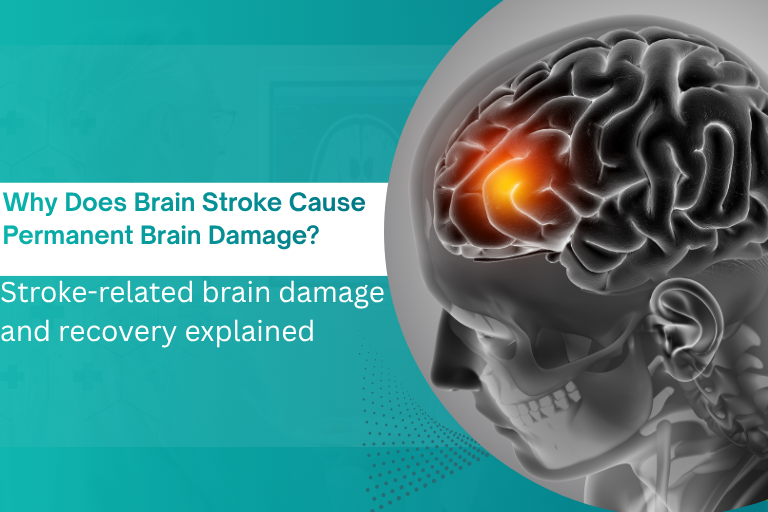
A brain stroke is a serious medical condition that occurs when the blood supply to a part of the brain is interrupted or when a blood vessel in the brain ruptures. Since the brain requires a continuous supply of oxygen and nutrients to function properly, even a brief interruption in blood flow can affect the activity of brain cells. Depending on the severity and duration of the stroke, this damage may lead to temporary neurological difficulties or permanent brain injury.
Brain damage after stroke can affect different functions, including movement, speech, memory, vision, balance, and coordination. While some individuals recover significantly with timely treatment and rehabilitation, others may experience long-term complications due to irreversible damage to brain tissue.
Understanding what happens to the brain during a stroke, why some injuries become permanent, and what influences recovery can help patients and their families make informed decisions about neurological care.
What Happens to the Brain During a Stroke?
The brain is one of the most oxygen-dependent organs in the body. It relies on a network of blood vessels to receive a continuous supply of oxygen-rich blood and glucose, which are essential for maintaining normal brain activity.
During a stroke, this supply is disrupted, preventing affected brain cells from receiving the oxygen and nutrients they need. As a result, the cells begin to lose their ability to function normally and may eventually die if blood flow is not restored.
There are two main types of brain stroke:
- Ischaemic stroke: This is the most common type of stroke. It occurs when a blood clot or another blockage prevents blood from reaching a particular area of the brain. The affected brain tissue receives insufficient oxygen and nutrients, which can cause cellular injury and neuronal death.
- Haemorrhagic stroke: This occurs when a blood vessel in the brain ruptures, causing bleeding within or around the brain. The accumulated blood can put pressure on surrounding brain tissue, disrupt normal circulation, and cause additional damage.
Both types of stroke can result in serious neurological complications. However, the underlying causes and treatment approaches differ depending on the type of stroke and the patient’s condition.
How Does a Stroke Affect the Brain?
A stroke can affect the brain in several ways. The extent of injury depends on which blood vessels are involved, how much brain tissue is affected, and how long the disruption in blood supply continues.
Reduced Blood and Oxygen Supply to Brain Cells
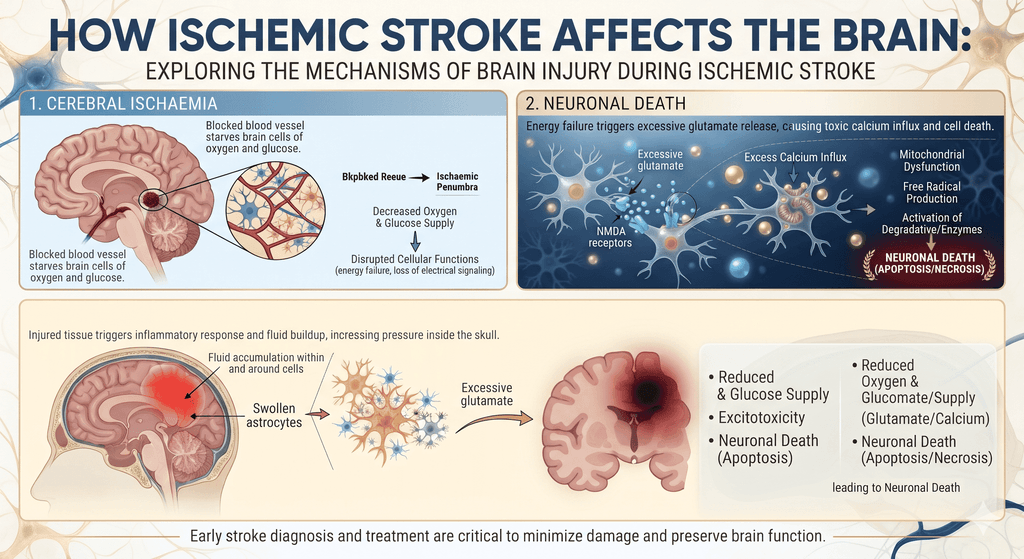
When a blood vessel becomes blocked, the affected part of the brain receives less oxygen and glucose than it needs to function. This condition is known as cerebral ischaemia.
Brain cells depend on oxygen to produce the energy required for essential activities, including transmitting electrical signals and maintaining normal cellular functions. When the oxygen supply decreases, these processes begin to fail.
In an ischaemic stroke, the area with the most severe reduction in blood flow may experience rapid and irreversible injury. Surrounding this area, there may be brain tissue that is impaired but not yet permanently damaged. This region is called the ischaemic penumbra.
Restoring blood flow quickly may help preserve some of this vulnerable tissue. This is one of the main reasons why early stroke diagnosis and treatment are so important.
Brain Cell Damage and Neuronal Death
When brain cells do not receive enough oxygen and glucose, their normal energy-producing processes become disrupted. This affects the mechanisms that regulate the movement of minerals and electrical signals across cell membranes.
One important consequence is the excessive release of glutamate, a chemical messenger involved in communication between nerve cells. Excessive glutamate activity can cause too much calcium to enter neurons, triggering a series of harmful biochemical reactions.
This process, known as excitotoxicity, can damage important cellular structures and eventually lead to neuronal death.
Once neurons are severely and irreversibly damaged, they generally cannot regenerate in sufficient numbers to replace the original brain tissue. The loss of these cells can affect the functions controlled by the damaged area of the brain.
Brain Swelling and Inflammation
Another important effect of a stroke is swelling in the affected brain tissue, medically known as cerebral oedema.
Following a stroke, injured brain cells and surrounding tissues can trigger inflammatory responses. Changes in cellular function may also cause fluid to accumulate within or around brain cells.
As the brain swells, pressure inside the skull may increase. Since the skull is a rigid structure, there is limited space for the brain to expand. Significant swelling can compress surrounding tissues and blood vessels, potentially worsening the injury.
In severe cases, increased pressure inside the skull can become life-threatening and requires urgent medical management.
Damage Caused by Bleeding in the Brain
In a haemorrhagic stroke, a ruptured blood vessel allows blood to leak into or around brain tissue.
This bleeding can damage the brain in several ways. The accumulated blood may directly injure surrounding cells, create pressure on nearby structures, and interfere with the normal circulation of blood and oxygen.
The breakdown of blood components can also trigger inflammation and additional cellular injury.
Depending on the location and amount of bleeding, a haemorrhagic stroke may affect movement, speech, consciousness, memory, and other neurological functions. Prompt medical treatment is essential to control bleeding, manage pressure, and prevent further complications.
Why Can Brain Damage After a Stroke Become Permanent?
Brain damage after a stroke can become permanent when brain cells experience prolonged oxygen deprivation, severe bleeding, or other forms of irreversible injury.
Unlike some tissues in the body, mature neurons have a very limited ability to regenerate. When a significant number of neurons die, the brain may not be able to restore the original tissue or its previous connections completely.
The effects also depend on the area of the brain affected. For example:
- Damage to the frontal lobe: May affect decision-making, planning, behaviour, emotional regulation, and voluntary movement.
- Damage to the parietal lobe: May interfere with sensory processing, spatial awareness, and the ability to recognise or understand certain sensations.
- Damage to the temporal lobe: May affect memory, language comprehension, and certain aspects of hearing.
- Damage to the occipital lobe: May lead to visual processing difficulties or loss of vision.
- Damage to the cerebellum: May affect balance, coordination, and the accuracy of movements.
- Damage to the brainstem: Can interfere with essential functions such as breathing, swallowing, consciousness, and heart rate regulation.
The brain also contains interconnected networks, meaning an injury in one location can sometimes affect functions involving other areas.
Although some neurological changes may improve over time, permanent damage can occur when the affected neurons and their connections are destroyed. This is why recognising stroke symptoms and seeking immediate emergency treatment are critical.
What Are the Chances of Brain Damage Recovery After a Stroke?
The chances of brain damage recovery after a stroke vary considerably from one individual to another. Some people experience significant improvement and regain much of their independence, while others may have lasting difficulties that require ongoing medical care and rehabilitation.
Recovery depends on the extent of brain injury, the location of the stroke, the patient’s overall health, and how quickly appropriate treatment is provided.
In some cases, early treatment can restore blood flow before more brain tissue becomes permanently damaged. This may help preserve neurological functions and improve the potential for recovery.
Can the Brain Heal Itself After a Stroke?
The brain has a remarkable ability to adapt following an injury through a process known as neuroplasticity. Neuroplasticity refers to the brain’s ability to reorganise its neural connections and modify how different areas communicate and function.
After a stroke, surviving neurons may develop new connections or strengthen existing pathways to help compensate for certain functions affected by the injury.
For example, if a stroke affects the brain regions involved in movement, rehabilitation exercises may encourage surviving neural networks to support improved motor control. Similarly, speech therapy can help individuals practise communication skills and develop alternative strategies when language abilities are affected.
However, it is important to understand that neuroplasticity does not mean that permanently damaged brain cells simply grow back. Instead, the brain adapts by using surviving cells and networks to support functions that may have been disrupted.
The extent of this adaptation varies between individuals. It depends on the severity of the injury, the functions affected, overall health, and the rehabilitation approach.
Consistent rehabilitation, appropriate medical supervision, and management of underlying health conditions can support the brain’s ability to adapt and help improve functional recovery.
When Should You Consult a Neurologist?
A stroke requires immediate medical attention. Recognising its warning signs and seeking emergency treatment without delay can help reduce the risk of severe brain damage and long-term disability.
The symptoms of a stroke usually develop suddenly and may include:
- Sudden weakness or numbness in the face, arm, or leg, particularly on one side of the body.
- Difficulty speaking or understanding speech.
- Sudden vision problems in one or both eyes.
- Loss of balance, dizziness, or difficulty walking.
- Sudden confusion or difficulty understanding what is happening.
- A sudden, severe headache without an apparent cause, particularly in some haemorrhagic strokes.
The B.E. F.A.S.T. approach can help identify common stroke warning signs:
- B – Balance: Sudden loss of balance or coordination.
- E – Eyes: Sudden changes in vision.
- F – Face: Drooping on one side of the face.
- A – Arms: Weakness or difficulty raising one arm.
- S – Speech: Slurred speech or difficulty speaking.
- T – Time: Seek emergency medical assistance immediately.
If you notice any of these symptoms in yourself or someone else, contact emergency medical services immediately. Do not wait to see whether the symptoms disappear. Even if the symptoms resolve within a short period, they may indicate a transient ischaemic attack (TIA), which also requires urgent medical evaluation.
Note the time when the symptoms first appeared or when the person was last known to be well, as this information can help doctors determine suitable treatment options.
Frequently Asked Questions
1. Does every brain stroke cause permanent brain damage?
No. Not every brain stroke results in permanent brain damage. The extent of injury depends on the type of stroke, the duration of interrupted blood supply, the area of the brain affected, and how quickly treatment is provided. Some individuals experience temporary neurological difficulties and recover significantly, while others may have lasting disabilities due to irreversible neuronal damage.
2. How quickly does a stroke damage brain cells?
Brain cells can begin to sustain damage within minutes of an interruption in blood supply. Without sufficient oxygen and nutrients, neurons lose their ability to function normally and may eventually die. The longer the interruption continues, the greater the risk of permanent brain injury. This is why immediate stroke treatment is essential.
3. Can damaged brain cells recover after a stroke?
Brain cells that have experienced severe and irreversible damage generally cannot regenerate sufficiently to restore the original tissue. However, some impaired cells may recover if blood flow is restored in time. The brain can also reorganise its neural connections through neuroplasticity, allowing surviving areas to support certain functions that were affected by the stroke. Rehabilitation helps encourage this process.
4. How long does brain recovery take after a stroke?
Stroke recovery varies from person to person. Some improvements may occur during the first few weeks and months, while other abilities may take longer to regain. Recovery can continue for months or years, particularly with consistent rehabilitation and appropriate medical support. The extent of improvement depends on the severity of the stroke, the affected brain region, overall health, and individual response to treatment.
5. Can a person live a normal life after a stroke?
Yes, many people can regain significant independence and return to several of their usual activities after a stroke. However, the extent of recovery depends on the amount of brain injury and the functions affected. Some individuals may recover almost completely, while others may need ongoing rehabilitation, assistive devices, or support with everyday activities. Early treatment, rehabilitation, and management of stroke risk factors can help improve long-term outcomes.