Effects of Sleep Deprivation on the Nervous System
Sleep is not simply a period when the body rests. It is an active biological process that supports brain function, memory, emotional regulation, and many other aspects of neurological health. When you regularly get less sleep than your body needs, the effects can extend beyond feeling tired the following day.
The effects of sleep deprivation can include difficulty concentrating, slower reaction times, memory problems, mood changes, and reduced ability to function normally during the day. Ongoing sleep disruption may also affect processes involved in brain maintenance and regulation.
So, how does sleep affect the nervous system? And can a lack of sleep actually damage your nerves? Understanding the relationship between sleep, the brain, and the nervous system can help you recognize when occasional tiredness has become a persistent concern.
General Effects of Sleep Deprivation
The effects of sleep deprivation can become noticeable even after relatively short periods of inadequate sleep. The severity depends on factors such as how much sleep is lost, how often sleep is disrupted, and an individual’s overall health.
Cognitive Effects
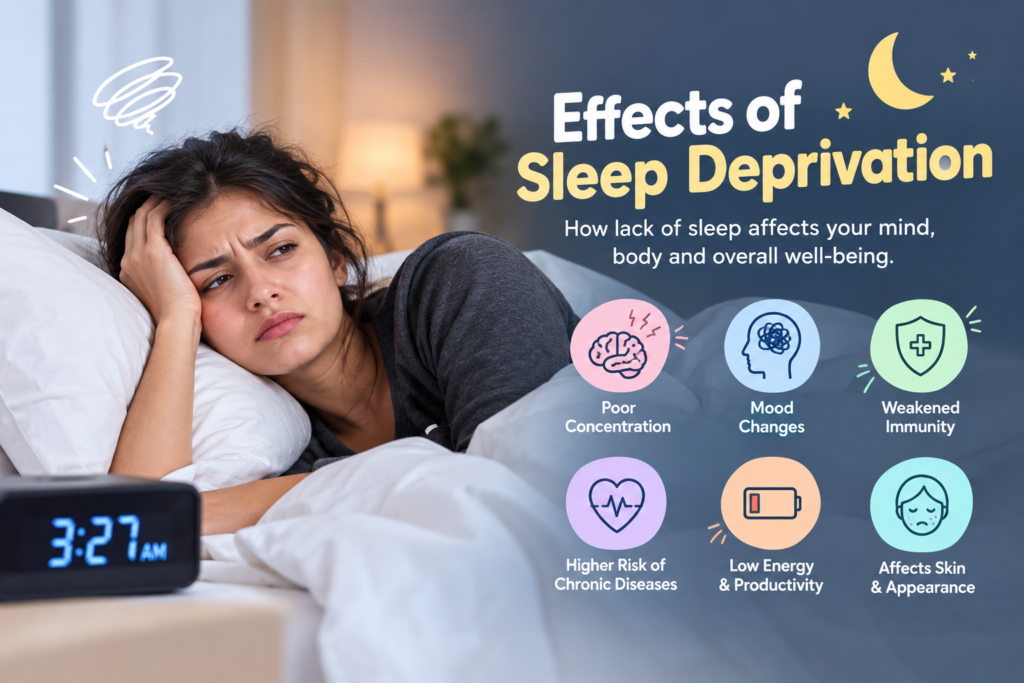
The brain relies on adequate sleep to support attention, learning, memory, and other cognitive processes. Sleep deprivation can make it harder to concentrate, process information, make decisions, and react quickly.
You may notice that you:
- Have difficulty focusing on tasks.
- Forget information more easily.
- Take longer to make decisions.
- Make more mistakes than usual.
- React more slowly.
- Find it harder to learn or retain new information.
These effects can be particularly important when sleep deprivation affects activities that require sustained attention, such as driving or operating machinery.
Mood and Emotional Changes
Poor sleep can also affect emotional regulation. People who are sleep-deprived may experience increased irritability, frustration, mood changes, or difficulty managing everyday stress.
If inadequate sleep continues over a longer period, it can contribute to a cycle in which stress makes sleeping more difficult and poor sleep makes it harder to manage stress.
Physical and Neurological Effects
Sleep deprivation may also affect physical performance and coordination. Some people experience headaches, reduced energy, slower responses, or a general feeling of mental and physical exhaustion.
Persistent sleep problems should not automatically be attributed to lifestyle. If sleep disruption continues despite reasonable efforts to improve sleep, an underlying sleep, neurological, psychological, or medical issue may need to be considered.
How Does Sleep Affect the Nervous System?
So, how does sleep affect the nervous system? Sleep provides the brain with an opportunity to regulate several processes that support normal neurological function.
During sleep, the brain remains highly active. Different stages of sleep are associated with different patterns of brain activity and play roles in memory processing, learning, emotional regulation, and restoration.
Sleep and Brain Waste Clearance
One area of growing neurological research is the glymphatic system, a network involved in the movement and clearance of substances from the brain. Research suggests that glymphatic activity is enhanced during sleep, particularly during deeper stages of non-REM sleep.
Sleep deprivation may interfere with this clearance process. Research has found changes in brain and cerebrospinal fluid biomarkers following sleep deprivation, although the relationship between these findings and long-term neurological disease is still being studied.
This does not mean that missing a night of sleep will cause neurological disease. Rather, it highlights why adequate and consistent sleep is considered an important part of maintaining brain health.
Sleep and Neurotransmitter Regulation
Sleep and wakefulness are controlled by complex interactions between brain regions, neural circuits, hormones, and neurotransmitters.
Adequate sleep helps maintain normal regulation of these systems. When sleep is repeatedly disrupted, these processes can be affected, contributing to changes in alertness, mood, concentration, and cognitive performance.
Sleep and Neural Recovery
Sleep also provides an important period for the brain and nervous system to recover from the demands of wakefulness.
Research continues to investigate how sleep affects processes involving brain metabolism, inflammation, neural connections, and myelin. Evidence suggests that poor sleep may be associated with changes in aspects of brain structure and function, but many of these relationships are complex and are still being studied.
This is why the sleep effect on nervous system health should be considered more broadly than simply asking whether you feel tired after a poor night’s sleep.
Can Lack of Sleep Cause Nerve Damage?
Can lack of sleep cause nerve damage? Based on current evidence, it would be too strong to say that ordinary sleep deprivation directly causes permanent nerve damage in otherwise healthy people.
However, chronic or severe sleep disruption can affect brain function, pain processing, cognitive performance, and processes involved in neurological health. Poor sleep may also worsen symptoms in people who already have certain neurological or nerve-related conditions.
The sleep effect on nerve damage is therefore more complicated than a simple cause-and-effect relationship. Sleep deprivation should not be considered a direct equivalent of nerve injury, but persistent poor sleep can affect how the nervous system functions and may make some symptoms more difficult to manage.
For example, someone already experiencing nerve pain may find that inadequate sleep makes the pain feel more difficult to tolerate. Similarly, people with neurological conditions may experience changes in symptoms when their sleep becomes disrupted.
If you are experiencing persistent numbness, tingling, burning pain, weakness, balance problems, or other neurological symptoms alongside poor sleep, it is worth discussing these symptoms with a healthcare professional rather than assuming that lack of sleep is the only explanation.
When Poor Sleep May Signal a Neurological Issue
Occasional poor sleep is common. However, persistent or unexplained sleep disruption may sometimes be associated with an underlying medical or neurological problem.
You may benefit from professional assessment if you experience:
- Persistent difficulty falling asleep or staying asleep.
- Excessive daytime sleepiness despite spending enough time in bed.
- Repeated nighttime awakenings without an obvious reason.
- Headaches that are becoming more frequent or severe.
- Sleep disruption associated with seizures or unusual nighttime movements.
- Persistent numbness, tingling, burning sensations, or nerve pain.
- New weakness or problems with balance or coordination.
- Significant memory or concentration difficulties.
- Symptoms that continue despite improving your sleep routine.
Sleep problems can also occur alongside conditions that affect the nervous system, and the relationship can work in both directions. A neurological condition may interfere with sleep, while poor sleep may make certain symptoms more noticeable.
A detailed medical history can help determine whether the problem is primarily related to sleep habits, a sleep disorder, medication, stress, or another underlying condition.
Struggling With Sleep Issues Affecting Your Health? Talk to a Neurologist
When poor sleep continues and is accompanied by neurological symptoms, understanding the underlying cause is more useful than simply treating tiredness as an isolated problem.
Dr. Amit Arora is a Consultant Neurologist at Fakeeh University Hospital, Silicon Oasis, Dubai, with around 15 years of clinical experience, including approximately 8 years of experience in the UAE.
Dr. Arora holds an MBBS, MD in Internal Medicine, and DM in Neurology, along with SCE Neurology from the Royal College of Physicians, UK, and Fellowship of the European Board of Neurology (FEBN). His specialist training includes a Clinical Epilepsy Fellowship at AIIMS, New Delhi, as well as further training at Cleveland Clinic, Ohio, in clinical epilepsy and neurophysiology.
A neurological consultation can help assess persistent symptoms such as headaches, sensory changes, nerve-related complaints, sleep-associated neurological symptoms, or changes in cognitive function. Dr. Arora takes a patient-focused approach, considering the nature, duration, associated symptoms, and overall pattern before determining whether further evaluation is appropriate.
If ongoing sleep problems are affecting your daily functioning or occurring alongside neurological symptoms, consider consulting Dr. Amit Arora at Fakeeh University Hospital, Silicon Oasis, Dubai for an appropriate neurological assessment.
Frequently Asked Questions
1. What are the effects of sleep deprivation on the body and brain?
The effects of sleep deprivation can include fatigue, difficulty concentrating, slower reaction times, memory problems, irritability, mood changes, and reduced physical and cognitive performance. Persistent sleep disruption may also affect processes involved in brain regulation and waste clearance.
2. Can lack of sleep cause nerve damage?
There is not enough evidence to state that ordinary sleep deprivation directly causes permanent nerve damage. However, chronic poor sleep can affect nervous system function and may worsen symptoms associated with certain neurological or nerve-related conditions. Persistent neurological symptoms should be evaluated rather than automatically attributed to lack of sleep.
3. How does sleep affect the nervous system?
Sleep supports several processes involved in normal brain and nervous-system function, including memory, learning, emotional regulation, metabolic processes, and brain waste clearance. Research suggests that the glymphatic system is particularly active during sleep and may be affected by sleep disruption.
4. Can poor sleep trigger headaches or migraines?
Yes. Changes in sleep patterns can be associated with headaches and migraine attacks in some people. Both insufficient sleep and significant changes in a person’s usual sleep schedule may contribute to symptoms. If headaches become frequent or change in pattern, a medical assessment can help identify possible causes and triggers.
5. How many hours of sleep does the nervous system need to repair itself?
There is no single number of hours that can be described as the exact amount required for the nervous system to “repair itself.” Sleep needs vary with age and individual circumstances. For most adults, regularly obtaining around seven to nine hours of sleep is generally recommended, although individual needs can differ. Sleep quality and consistency are also important.
6. When should you see a neurologist about sleep-related symptoms?
Consider seeing a neurologist if persistent sleep problems occur alongside neurological symptoms such as frequent headaches, unexplained numbness or tingling, nerve pain, weakness, balance problems, seizures, or significant changes in memory or concentration. A specialist can help determine whether the symptoms may have an underlying neurological cause and whether further evaluation is appropriate.