Migraine Causes and Triggers: What Really Causes Migraines?

While most headaches are considered minor discomforts, migraines are far more serious – a neurological condition marked by moderate to severe head pain. Symptoms include nausea, vomiting, sensitivity to light or sound, and even visual or sensory changes for some sufferers. In other words, a migraine attack can significantly impact your day-to-day life, making it harder to focus at work, get proper rest, engage in physical activity, or just go about doing basic things around the house.
Yet despite knowing all this, what’s behind your next headache remains unclear. On the one hand, there’s evidence suggesting migraine has its roots in our genes and in how we perceive stimuli neurologically. But on the flip side, various external influences seem to be capable of causing attacks too, from things going on physically inside the body (like hormones) down to decisions made daily (such as eating choices).
Differentiating these potential causes of migraines from their accompanying triggers will allow you to begin identifying trends related specifically to your own experiences, if nothing else, potentially aiding long-term management strategies. Here’s everything you need to know about migraine causes vs triggers.
What Causes Migraines?
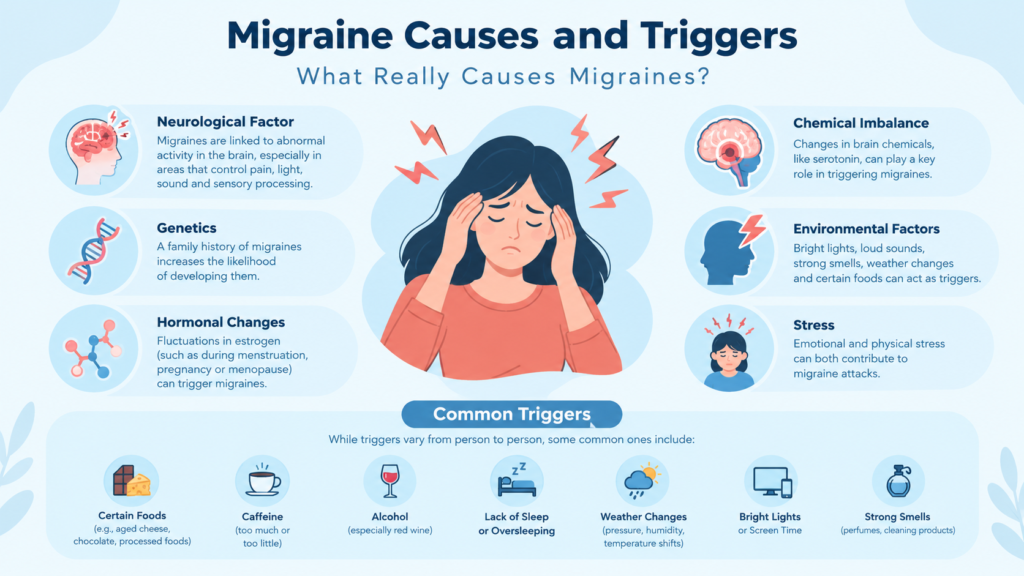
The exact cause of migraine is not completely understood. However, research suggests that genetics, neurological processes, brain chemistry, and hormonal factors can all contribute to a person’s susceptibility to migraine.
Genetic Factors
Migraines can run in families. Having a close biological relative with migraine may increase your likelihood of experiencing it yourself. This does not mean that everyone with a family history will develop migraines, but genetics can influence how the brain processes pain and responds to certain stimuli.
A family history can therefore be an important part of understanding why someone experiences recurring migraine attacks.
Neurological and Brain Chemistry Factors
Migraine is considered a neurological disorder involving changes in how the brain and nervous system process sensory information and pain.
During a migraine attack, changes in nerve activity can contribute to pain signalling and the release of inflammatory substances around nerves and blood vessels. The exact mechanisms are complex and continue to be studied.
This is one reason a migraine should not simply be viewed as a particularly severe headache. It involves neurological processes that can produce a range of symptoms beyond head pain.
Hormonal Factors
Hormonal fluctuations can influence migraine patterns, particularly in some women. Changes in oestrogen levels around menstruation, pregnancy, or menopause may affect when migraine attacks occur.
Hormonal changes do not affect everyone in the same way, and an individual’s migraine pattern can change over time. Keeping track of symptoms alongside menstrual or other hormonal changes may help identify whether there is a recurring relationship.
Common Migraine Triggers
A migraine trigger is a factor that may bring on an attack in someone who is susceptible to migraines. Triggers can vary significantly between individuals, and one person’s trigger may not affect someone else.
Some people also have more than one trigger. For example, missing a meal may not cause a migraine on its own, but when combined with poor sleep and stress, it may contribute to an attack.
Understanding what triggers migraines can therefore be more useful than following a universal list of things to avoid.
Most Common Migraine Triggers
Some of the most common migraine triggers include:
- Stress: Emotional or physical stress can contribute to migraine attacks in some people.
- Changes in sleep: Sleeping too little, sleeping too much, or significant changes to your usual sleep schedule may act as triggers.
- Skipped meals: Going for long periods without eating may increase the likelihood of an attack.
- Dehydration: Not drinking enough fluids can contribute to headaches and may trigger migraines in some people.
- Hormonal changes: Fluctuations in hormones, particularly around menstruation, may trigger migraine attacks.
- Caffeine changes: Large amounts of caffeine or a sudden reduction in usual caffeine intake may affect some people.
- Alcohol: Alcoholic beverages can trigger migraines in some individuals.
- Bright lights: Strong sunlight, glare, flashing lights, or certain artificial lighting may act as sensory triggers.
- Strong sounds or smells: Loud noises, perfumes, smoke, or other strong odours may contribute to an attack.
- Weather changes: Changes in temperature, humidity, or atmospheric pressure may be associated with migraine attacks in some people.
- Overexertion: Intense physical activity can trigger migraines for some individuals.
- Certain foods: Some people report migraine attacks after consuming particular foods or food additives.
Not everyone with migraine will respond to all of these factors. A trigger should be considered personal rather than automatically assumed.
Full List of Migraine Triggers
If you are creating a list of migraine triggers to discuss with your healthcare provider, consider tracking the following:
- Stress or emotional strain
- Changes in sleep schedule
- Sleep deprivation
- Oversleeping
- Skipping or delaying meals
- Dehydration
- Hormonal fluctuations
- Menstruation
- Excessive or changing caffeine intake
- Alcohol
- Certain foods or food additives
- Aged or processed foods
- Bright or flashing lights
- Strong sunlight or glare
- Loud noises
- Strong perfumes or odours
- Weather or atmospheric pressure changes
- Intense physical exertion
- Certain medications
- Tobacco exposure
- Changes in routine
- Prolonged sensory stimulation
This list is not intended to suggest that every factor will trigger migraine in every person. The most useful approach is to identify patterns specific to your own attacks.
Causes vs Triggers – What’s the Difference?
The terms migraine causes and migraine triggers are sometimes used interchangeably, but they describe different things. Underlying factors such as genetics and neurological susceptibility may make a person more prone to migraine, while triggers such as stress, hormonal changes, skipped meals, sleep disruption, or sensory stimuli may help initiate an individual attack.
How Understanding Your Triggers Can Help Manage Migraines
Identifying your personal triggers can make it easier to understand when and why migraine attacks occur. However, avoiding every possible trigger is neither realistic nor necessary for most people.
A headache or migraine diary can be useful. Record details such as:
- When the migraine started
- How long did it last
- What symptoms do you experience
- What you ate and drank beforehand
- Your sleep pattern
- Your stress level
- Any hormonal changes
- Your activities that day
- Exposure to bright light, strong smells, or loud sounds
- Any medication taken before or during the attack
Over time, this information may reveal patterns that are difficult to notice otherwise. A healthcare professional can also use this information when assessing your symptoms and discussing an appropriate management approach.
It is also important not to eliminate large groups of foods or make major lifestyle changes solely because they appear on a general list of migraine triggers. If a particular factor repeatedly appears before your attacks, discuss the pattern with a healthcare professional.
Struggling to Identify Your Migraine Triggers? Get Expert Help
When migraines occur repeatedly, identifying the specific pattern behind your attacks can be challenging. A neurologist can assess the nature of your headaches, associated symptoms, frequency, medical history, family history, and possible triggers to determine whether further evaluation is appropriate.
Dr. Amit Arora is a Consultant Neurologist at Fakeeh University Hospital, Silicon Oasis, Dubai, with extensive clinical experience in neurology and additional specialist training in epilepsy and clinical neurophysiology.
He holds an MBBS, MD in Internal Medicine, and DM in Neurology, along with SCE Neurology from the Royal College of Physicians, UK, and Fellowship of the European Board of Neurology (FEBN). His training also includes a Clinical Epilepsy Fellowship at AIIMS, New Delhi, and further international training at Cleveland Clinic, Ohio.
For someone experiencing recurrent migraines, a consultation can help move beyond simply treating individual episodes and toward understanding the overall pattern. Discussing potential triggers, associated symptoms, attack frequency, and changes over time can help a neurologist determine the appropriate next steps.
If you are experiencing frequent migraines or are struggling to understand what can cause a migraine in your case, consider consulting Dr. Amit Arora at Fakeeh University Hospital, Silicon Oasis, Dubai.
1. What are the most common migraine triggers?
The most common migraine triggers can include stress, changes in sleep, hormonal fluctuations, skipped meals, dehydration, caffeine changes, alcohol, certain foods, bright lights, strong smells, loud sounds, weather changes, and intense physical activity. Triggers vary from person to person, so identifying your own pattern is more useful than avoiding every possible trigger.
2. What foods can trigger a migraine?
Certain foods may trigger migraines in some people, although food triggers are highly individual. Examples that are sometimes associated with migraine include aged cheese, processed or cured foods, alcohol, chocolate, and foods containing certain additives. Rather than eliminating foods without evidence that they affect you, keeping a migraine diary can help identify whether a particular food consistently precedes an attack.
3. Can stress alone cause a migraine?
Stress can be a significant migraine trigger for some people, but migraines are not simply caused by stress. Genetic and neurological factors can contribute to migraine susceptibility, while stress may act as a factor that initiates an individual attack. Some people may also notice migraines when stress levels fall after a particularly stressful period.
4. Are migraines hereditary?
Migraines can run in families, and having a close biological relative with migraines can increase your likelihood of experiencing them. Genetics is considered an important factor in migraine susceptibility, although having a family history does not guarantee that someone will develop migraine.
5. How do hormones affect migraines?
Hormonal fluctuations can influence migraine patterns in some people. Changes in oestrogen levels, particularly around menstruation, may be associated with migraine attacks. Hormonal influences vary between individuals, so tracking migraine episodes alongside hormonal changes may help identify a pattern.
6. When should I see a neurologist about frequent migraines?
Consider consulting a neurologist if your migraines are frequent, becoming more severe, changing in pattern, interfering with work or daily activities, or becoming difficult to manage. New neurological symptoms, a sudden, extremely severe headache, or a headache following a significant head injury require prompt medical assessment.
A neurologist can review your symptoms, medical history, headache pattern, and potential triggers and determine whether additional evaluation or a different management approach may be appropriate.