Adult ADHD: 7 Signs You Shouldn’t Ignore
Attention-deficit/hyperactivity disorder (ADHD) is often associated with children who struggle to sit still, pay attention in class, or follow instructions. But ADHD does not necessarily disappear with age. For many people, symptoms continue into adulthood and can affect work, relationships, daily responsibilities, and emotional well-being.
The signs of ADHD in adults can also look different from the symptoms commonly seen in children. Instead of obvious hyperactivity, an adult may experience constant restlessness, difficulty organizing tasks, chronic procrastination, forgetfulness, or trouble managing emotions.
Recognizing these patterns does not mean that every distracted or forgetful person has ADHD. However, when these difficulties are persistent, began in childhood, occur across different areas of life, and interfere with daily functioning, they may be worth discussing with a healthcare professional.
Here are seven common signs of adult ADHD that should not be ignored.
1. You Struggle to Stay Focused
Everyone loses focus occasionally. With ADHD, however, difficulty paying attention can be persistent and disruptive.
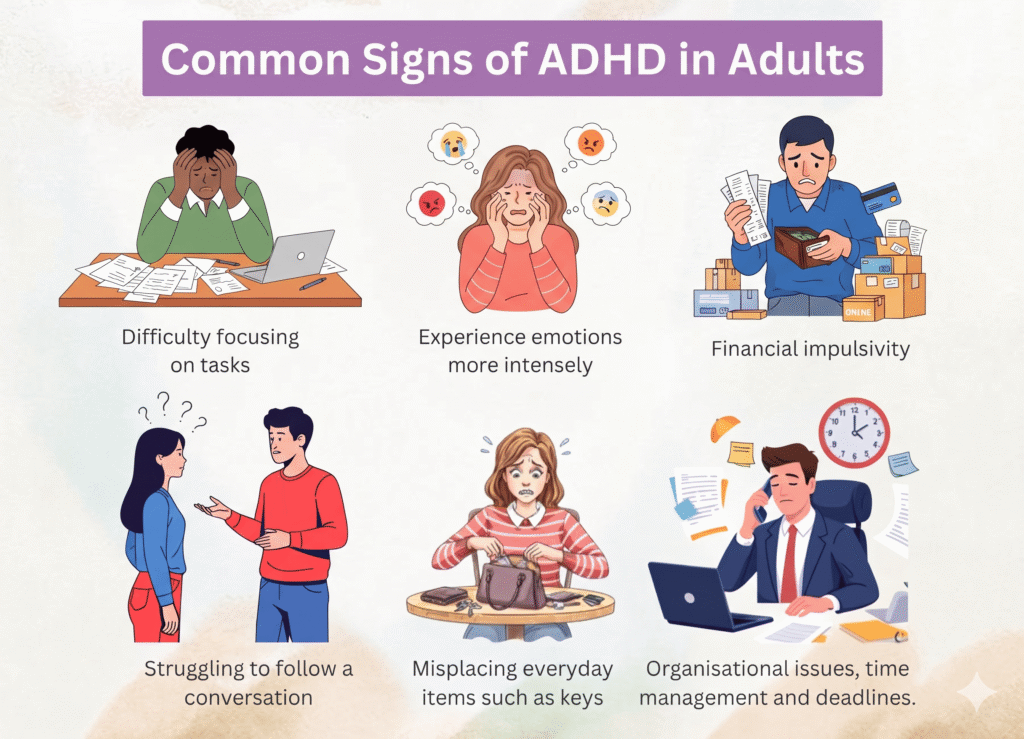
You may find that your mind wanders during conversations, meetings, reading, or other activities that require sustained attention. You might become distracted by sounds, notifications, thoughts, or unrelated tasks and then struggle to return to what you were doing.
Another common pattern is starting several tasks but having difficulty finishing them. Even when you understand what needs to be done, maintaining attention long enough to complete it can feel unusually difficult.
These ongoing attention problems can affect productivity at work and make everyday responsibilities feel more complicated than they should.
2. Forgetfulness and Disorganization Are Affecting Your Daily Life
Misplacing your phone or keys once in a while is normal. Frequent forgetfulness and difficulty staying organized can be one of the signs of ADHD in adults.
You may regularly:
- Lose your keys, wallet, phone, or other important belongings
- Miss appointments or deadlines
- Forget tasks you intended to complete
- Struggle to maintain a consistent routine
- Find it difficult to keep your home or workspace organized
- Have trouble remembering instructions or commitments
For some adults, these difficulties create a cycle of frustration. They know what needs to be done but repeatedly struggle to keep track of everything.
3. You Feel Restless Even When You Are Sitting Still
Hyperactivity does not always look like constantly moving around.
In adults, it can appear more subtly as an ongoing sense of internal restlessness. You may feel “on edge,” find it difficult to relax, or feel the need to stay busy even when there is no particular reason to do so.
Some adults with ADHD may frequently shift activities, have difficulty sitting through long meetings, or feel uncomfortable when they are not doing something.
This type of restlessness can be easy to dismiss as simply having a busy personality. When it is persistent and occurs alongside other symptoms, however, it may be worth discussing with a professional.
4. You Often Act Before Thinking
Impulsivity is another important feature of ADHD.
An adult may interrupt conversations, speak before someone has finished talking, make decisions without fully considering the consequences, or struggle to wait.
Impulsivity can also appear in major areas of life. For example, someone may make an unplanned purchase, suddenly decide to quit a job, or make a significant relationship decision without taking enough time to consider the outcome.
Occasional impulsive decisions happen to everyone. The concern is when this pattern happens repeatedly and creates problems in personal, professional, or financial life.
5. Managing Time Feels Surprisingly Difficult
ushing because you started something later than planned?
Difficulty with time management is common among adults with ADHD.
This may show up as:
- Chronic lateness
- Repeated procrastination
- Missing deadlines
- Struggling to prioritize tasks
- Putting off important responsibilities until the last moment
- Misjudging how much time is needed to complete something
For some people, procrastination is not simply a matter of laziness or lack of motivation. Difficulties with attention, organization, and managing competing tasks can make it harder to get started and stay on track.
6. You Experience Frequent Irritability or Emotional Ups and Downs
Emotional difficulties are not among the core diagnostic symptoms of ADHD, but many adults with ADHD report problems with frustration and emotional regulation.
You may become irritated quickly, feel overwhelmed by relatively small problems, or experience strong emotional reactions that are difficult to control.
For example, a minor inconvenience may trigger an unusually intense reaction, or frustration may build quickly when you are struggling to complete a task.
These experiences can affect relationships and self-esteem, particularly when a person does not understand why they seem to react differently from others.
7. ADHD Symptoms Are Creating Problems at Work or in Relationships
Perhaps the most important question is not simply whether you recognize individual symptoms, but whether these patterns are interfering with your life.
Difficulty concentrating may affect your performance at work. Forgetfulness may lead to missed commitments. Impulsivity may create conflict. Poor time management may cause repeated lateness. Emotional difficulties may make relationships more challenging.
When these patterns consistently interfere with responsibilities, relationships, or everyday functioning, they deserve attention.
Having a few of these experiences does not automatically mean you have ADHD. A proper assessment is necessary to determine whether ADHD is actually the cause.
How Is ADHD Diagnosed in Adults?
An ADHD diagnosis involves more than completing an online checklist or recognizing yourself in a list of symptoms.
Healthcare professionals consider the person’s symptoms, history, and functioning. One important part of the assessment is determining whether symptoms were present during childhood, generally before the age of 12, even if ADHD was never formally diagnosed at that time.
Symptoms should also be present in more than one setting. For example, difficulties may occur both at work and at home rather than being limited to one particular situation.
The symptoms must also cause meaningful difficulties in everyday functioning rather than simply representing an occasional bad day, temporary stress, or a particularly demanding period of life.
Because adults may not clearly remember their childhood behavior, a doctor may also speak with someone who knows the person well, such as a parent, partner, or close friend, when appropriate.
Other conditions or circumstances can also cause difficulties with concentration, memory, mood, or sleep. This is why a professional assessment is important before assuming that ADHD is the explanation.
Why a Complete Neurological Assessment Matters
It is easy to attribute concentration difficulties, headaches, fatigue, or other symptoms to a busy lifestyle or prolonged screen use. However, symptoms that are persistent, recurrent, or changing should not automatically be attributed to one possible trigger without assessment.
A neurologist can look at the complete picture rather than focusing on one suspected cause. This includes understanding the person’s symptoms, medical history, associated features, frequency, and changes over time.
Dr. Amit Arora is a Consultant Neurologist at Fakeeh University Hospital, Silicon Oasis, Dubai, with extensive clinical experience in neurology and additional specialist training in epilepsy and clinical neurophysiology. He holds an MBBS, MD in Internal Medicine, and DM in Neurology, along with SCE Neurology from the Royal College of Physicians, UK, and Fellowship of the European Board of Neurology (FEBN). His training also includes a Clinical Epilepsy Fellowship at AIIMS, New Delhi, and further international training at Cleveland Clinic, Ohio.
For someone experiencing recurrent neurological symptoms, a consultation can help move beyond treating individual episodes and toward understanding the overall pattern. Discussing possible triggers, associated symptoms, frequency, and changes over time can help determine the appropriate next steps.
What Happens After an ADHD Diagnosis?
If an evaluation confirms ADHD, treatment can be tailored to the person’s symptoms, circumstances, and needs.
ADHD treatment for adults may include medication, therapy, or a combination of approaches.
Medications used to treat ADHD include stimulant medicines such as methylphenidate and lisdexamfetamine. A healthcare professional can determine whether medication is appropriate and discuss potential benefits, risks, and alternatives.
Therapy can also help adults develop practical strategies for managing everyday challenges. Cognitive behavioral therapy (CBT), for example, may help with organization, time management, coping strategies, and patterns of thinking that contribute to difficulties in daily life.
The goal of treatment is not simply to make someone “more focused.” Appropriate treatment can help adults manage symptoms and function more effectively in areas such as work, relationships, organization, and emotional regulation.
Why Recognizing Adult ADHD Matters?
Adult ADHD is more common than many people realize. Estimates suggest that approximately 3–7% of adults may have ADHD, while many people who had ADHD during childhood continue to experience symptoms later in life.
Because adult symptoms can be less obvious than childhood hyperactivity, some people may spend years assuming that their difficulties are simply personality traits, poor discipline, stress, or a lack of motivation.
Persistent symptoms can have wider consequences. Ongoing problems with organization, attention, impulsivity, and emotional regulation may affect work, relationships, confidence, and self-esteem.
Recognizing the possibility of ADHD does not mean labeling yourself. It means understanding that persistent difficulties may have an underlying explanation and may be worth discussing with a qualified healthcare professional.
Frequently Asked Questions (FAQs)
Can adults really have ADHD?
Yes. ADHD can continue from childhood into adulthood, and some adults may not receive a diagnosis until later in life. Adult symptoms may be less visibly hyperactive and may instead involve difficulties with attention, organization, time management, impulsivity, and emotional regulation.
What are the most common signs of ADHD in adults?
Common signs include difficulty maintaining attention, forgetfulness, disorganization, restlessness, impulsive behavior, poor time management, and problems with work or relationships. Irritability and difficulties managing emotions are also frequently reported by adults with ADHD.
How is ADHD diagnosed in adults?
An ADHD diagnosis involves a professional assessment of symptoms, history, and daily functioning. Symptoms generally need to have been present since childhood, occur in more than one setting, and cause meaningful difficulties. A healthcare professional may also gather information from someone who knows the person well.
Can ADHD be diagnosed for the first time in adulthood?
Yes. Some people reach adulthood without being diagnosed, particularly when their childhood symptoms were overlooked or did not cause significant problems at school. An adult assessment can help determine whether longstanding difficulties are consistent with ADHD.
What is the treatment for ADHD in adults?
ADHD treatment for adults may include medication, therapy, or both. Stimulant medications such as methylphenidate or lisdexamfetamine may be used, while approaches such as cognitive behavioral therapy can help develop practical coping and organizational strategies. Treatment should be discussed with a qualified healthcare professional.
Is being forgetful or easily distracted enough to mean I have ADHD?
No. Forgetfulness and distractibility can occur for many reasons and are experienced by most people occasionally. ADHD is diagnosed based on a persistent pattern of symptoms that began during childhood, occur across settings, and cause meaningful difficulties in daily functioning.