
How Smartphones Are Changing Our Brains
Your smartphone may be sitting beside you right now. You may have checked it a few minutes ago, switched between messages and work, or spent some time scrolling before starting this article. For many people, this has become such a routine part of daily life that it is easy to forget how often the brain is being asked to respond to screens, notifications, and constant streams of information.
This raises an important question: how do smartphones affect the brain?
The answer isn’t as simple as saying smartphones are damaging or harmless. Research is increasingly examining the relationship between smartphone use, attention, sleep, cognitive function, and headaches. Some studies have found associations between problematic smartphone use and changes in brain activity or function, but these findings do not prove that normal smartphone use causes permanent brain damage.
The more practical question is how our daily smartphone habits may influence sleep, concentration, and neurological symptoms — and what we can do about it.
Why Your Brain Finds Smartphones So Hard to Ignore
Smartphones provide a continuous stream of information. A message arrives, a notification appears, a video starts playing, or a new piece of content is only one swipe away.
Every time you switch from one activity to another, your attention has to shift. If this happens repeatedly throughout the day, maintaining focus on one task can become more difficult.
Research has begun investigating this relationship. A systematic review of functional MRI studies found associations between problematic smartphone and internet use and changes involving brain systems associated with cognitive control, reward processing, and executive functions. However, the researchers also highlighted important limitations, meaning these findings should not be interpreted as proof that smartphone use directly causes permanent brain changes.
This distinction matters.
Using your phone to answer a message or look something up is very different from spending many hours compulsively switching between apps. The concern is often less about the device itself and more about patterns of excessive or problematic use.
How Smartphones Affect the Brain Through Sleep?
One of the most important ways smartphones can influence brain health may be indirect: by affecting sleep.
Imagine someone who gets into bed at 10:30 p.m. with the intention of sleeping. They check one message, scroll through a few posts, and watch a short video. Suddenly, it is midnight.
This may happen occasionally without causing a significant problem. But when it becomes a nightly routine, the lost sleep can accumulate.
Sleep is important for memory, attention, emotional regulation, and normal daytime functioning. Research examining electronic media use has found associations between greater media use and poorer sleep quality, including sleep problems associated with problematic smartphone use.
A large meta-analysis of cohort studies also found that increased screen time was associated with shorter sleep duration and a greater likelihood of insufficient sleep.
So, when someone feels mentally tired after spending too much time on their phone, the explanation may not be that the phone has “tired out the brain.” It may be that the phone has contributed to less or poorer-quality sleep.
Can Smartphone Use Trigger Headaches or Migraines?
This is where smartphone habits become particularly relevant for people who already experience headaches or migraines.
Prolonged screen use can coincide with several factors that may contribute to headaches, such as visual discomfort, prolonged posture, reduced physical activity, stress, and delayed sleep.
Research is beginning to explore this relationship more directly. A recent systematic review and meta-analysis covering 22 studies and more than 14,000 participants found an association between greater digital screen exposure and higher odds of headache or migraine. However, the researchers rated the certainty of the evidence as low, partly because many studies were observational. This means the findings show a relationship but do not establish that screen exposure alone causes migraines.
That is an important distinction for anyone trying to identify their migraine triggers.
Case Story: Is the Phone Really Causing the Headache?
Consider a person who starts experiencing headaches three or four times a week.
They work on a computer during the day and spend another two to three hours on their smartphone in the evening. Naturally, they begin to think, “My phone is causing my headaches.”
But when they start paying closer attention, they notice something else.
Their headaches are more likely to appear on days when they sleep late, skip a meal, drink less water, and spend longer than usual looking at screens. On days when they sleep adequately, eat regularly, and take breaks from prolonged screen use, the pattern is different.
In this situation, blaming the phone alone may oversimplify what is happening.
For someone with recurrent migraines, identifying the pattern behind attacks can be challenging because several potential triggers may occur at the same time. A neurologist can assess the nature of the headache, associated symptoms, frequency, medical history, family history, and possible triggers to determine whether further evaluation is appropriate.
Keeping a simple headache diary can also help. Recording screen exposure alongside sleep, meals, hydration, stress, and the timing of symptoms may reveal a pattern that is difficult to remember otherwise.
What About Your Eyes and Neck?
Not every problem associated with prolonged smartphone use originates directly in the brain.
Looking at a screen for long periods can cause visual discomfort or eye strain, while holding a phone in the same position for extended periods can contribute to neck and shoulder discomfort.
A recent systematic review examining asthenopia, or visual fatigue, identified symptoms such as headaches and difficulty concentrating and found prolonged screen exposure among associated risk factors.
These effects can also interact.
Someone may spend several hours looking down at a phone, develop neck discomfort, continue using the device late at night, and then sleep less than usual. The following day, they may experience fatigue and difficulty concentrating.
The smartphone is part of the story, but it may not be the whole story.
Does Smartphone Use Permanently Damage the Brain?
This is one of the most common concerns—and one that deserves a careful answer.
Current research does not support the simple claim that ordinary smartphone use permanently damages the brain.
Some neuroimaging studies have found associations between problematic smartphone use and differences in brain activity, structure, or networks involved in cognitive and reward-related processes. But association does not establish causation. It is also difficult to separate smartphone use from other factors that often accompany it, such as sleep deprivation, stress, sedentary behaviour, and other lifestyle habits.
Therefore, rather than worrying about every minute spent on a smartphone, it is more useful to examine whether your usage is affecting important aspects of your life.
Signs That Your Smartphone Habits May Need Attention
You may want to reconsider your screen habits if you regularly:
- Stay up later because you continue using your phone.
- Check your phone repeatedly without a clear reason.
- Find it difficult to concentrate on one task without checking notifications.
- Experience headaches after prolonged screen sessions.
- Notice eye discomfort or difficulty focusing.
- Spend several hours on your phone without taking breaks.
- Feel that smartphone use is interfering with sleep, work, or other daily activities.
None of these signs automatically means that you have a neurological disorder. They are simply useful signals to pay attention to.
Simple Ways to Build Healthier Smartphone Habits
You do not have to stop using your smartphone to take better care of your brain.
Start by taking regular breaks during long periods of screen use. If you work on a computer all day, avoid immediately moving from the computer to several more hours on your phone without giving yourself a break.
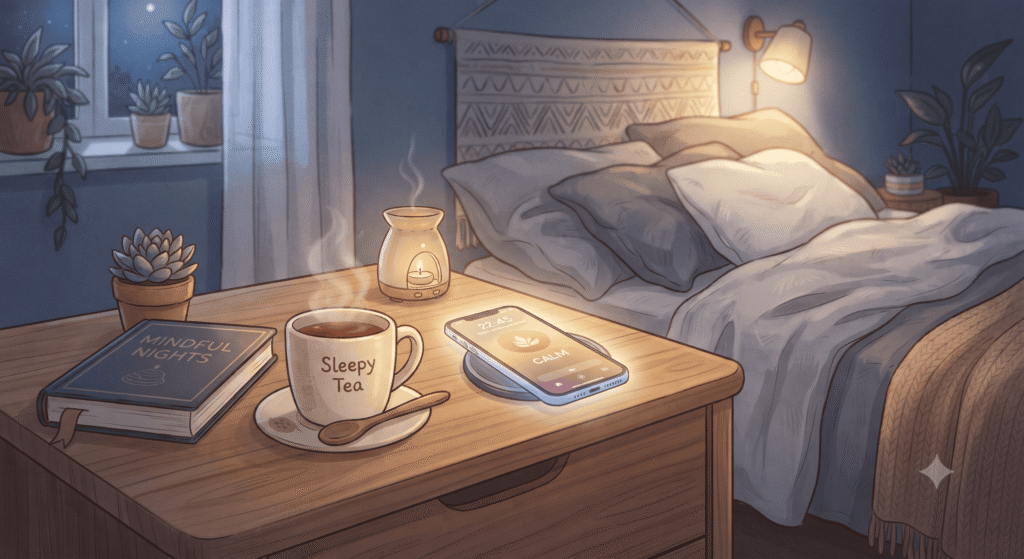
Pay particular attention to nighttime use. If scrolling regularly delays your bedtime, consider keeping your phone away from the bed or setting a specific time to stop using it.
It can also help to maintain regular meals, stay adequately hydrated, and remain physically active.
Most importantly, notice patterns. If headaches repeatedly occur after long periods of screen use, record what else was happening that day. Were you sleeping poorly? Had you skipped lunch? Were you stressed? Had you spent unusually long hours on a computer?
These details can help distinguish a possible screen-related pattern from a broader migraine trigger.
When Should You Consult a Neurologist?
An occasional headache after a long day of screen use does not necessarily indicate a serious neurological problem. However, recurrent or changing headaches should not simply be attributed to smartphones without assessment.
A neurologist can look at the complete picture rather than focusing on one possible trigger.
Dr. Amit Arora is a Consultant Neurologist at Fakeeh University Hospital, Silicon Oasis, Dubai, with extensive clinical experience in neurology and additional specialist training in epilepsy and clinical neurophysiology.
He holds an MBBS, MD in Internal Medicine, and DM in Neurology, along with SCE Neurology from the Royal College of Physicians, UK, and Fellowship of the European Board of Neurology (FEBN). His training also includes a Clinical Epilepsy Fellowship at AIIMS, New Delhi, and further international training at Cleveland Clinic, Ohio.
For someone experiencing recurrent migraines, a consultation can help move beyond treating individual episodes and toward understanding the overall pattern. Discussing possible triggers, associated symptoms, attack frequency, and changes over time can help determine the appropriate next steps.
Your Smartphone May Not Be the Problem – Your Pattern of Use Might Be
Smartphones are now deeply integrated into everyday life, so completely avoiding them is neither realistic nor necessary for most people.
The more useful approach is to understand how smartphones affect the brain through our habits – particularly when screen use begins to interfere with sleep, concentration, or headache patterns.
The evidence is still evolving. Some studies have identified associations between problematic smartphone use and brain function, while research has also connected greater screen exposure with sleep problems and headaches. But these findings need to be interpreted carefully rather than turned into claims about permanent brain damage.
If you are experiencing frequent migraines or are struggling to understand what may be triggering your headaches, consider consulting Dr. Amit Arora, Consultant Neurologist at Fakeeh University Hospital, Silicon Oasis, Dubai. A detailed assessment can help identify the overall pattern and guide the appropriate next steps.
Frequently Asked Questions (FAQs)
1. How do smartphones affect the brain?
Smartphones can influence behaviours related to attention, sleep, and cognitive functioning, particularly when use becomes excessive or problematic. Research has found associations between problematic smartphone use and certain changes in brain function, but this does not establish that normal smartphone use causes permanent brain damage.
2. What is the cell phone effect on brain health?
The cell phone effect on brain health depends partly on how the device is used. Excessive use may contribute to disrupted sleep, reduced attention, prolonged sedentary behaviour, and headaches in some individuals. Current research does not support a simple conclusion that everyday cell phone use causes permanent brain damage.
3. Can smartphones cause migraines?
Smartphone and screen exposure may be associated with headaches or migraines in some people, but migraines usually have multiple potential triggers. Sleep disruption, stress, dehydration, and individual sensitivity can also play a role. Research has found an association between higher digital screen exposure and headache or migraine, but causation has not been firmly established.
4. Can using a smartphone at night affect sleep?
Yes. Smartphone use at night can delay bedtime and may be associated with poorer sleep quality. If using your phone regularly causes you to sleep later or disrupts your sleep routine, reducing nighttime use may be beneficial.
5. Should I stop using my phone if I get headaches?
Not necessarily. Instead, look for patterns. Note when the headaches occur and whether they coincide with prolonged screen use, poor sleep, skipped meals, dehydration or other potential triggers. If headaches are frequent or interfering with daily life, consult a neurologist.
6. When should I see a neurologist for recurrent headaches?
Consider a neurological consultation when headaches are frequent, becoming more severe or changing in their usual pattern, or when they interfere with work, sleep, or everyday activities. A neurologist can assess your symptoms and medical history and determine whether further evaluation is appropriate.