
Why Do You Wake Up with a Headache? Causes and When to Seek Help
Waking up with a headache can make it difficult to start your day comfortably. While an occasional morning headache may be related to poor sleep, dehydration, stress, or changes in caffeine consumption, experiencing a headache every morning may indicate an underlying health condition that requires medical attention.
Morning headaches can have several causes, including migraines, tension-type headaches, sleep disorders, obstructive sleep apnea, and changes in intracranial pressure. Certain medical conditions and medication-related factors may also contribute to recurring headaches after waking up. Identifying the underlying cause is important because treatment depends on the type of headache and the factors triggering it.
Understanding why you wake up with a headache can help you recognise associated symptoms, identify possible triggers, and determine when to consult a neurologist for further evaluation.
What Are Morning Headaches?
Morning headaches are headaches that occur upon waking up or shortly after getting out of bed. They can range from mild discomfort to severe pain that affects concentration, daily activities, and overall quality of life.
The pain may feel like pressure around the forehead, a dull ache across both sides of the head, or throbbing pain concentrated in a particular area. Some individuals may also experience nausea, sensitivity to light or sound, dizziness, or neck discomfort, depending on the underlying headache disorder.
Morning headaches do not represent a single medical condition. Instead, they can be associated with different primary headache disorders and secondary medical conditions.
Some people experience an occasional morning headache, while others report waking up with headaches several times a week or almost every day. The frequency, intensity, duration, and accompanying symptoms can provide important information about the possible cause.
If you regularly experience headaches after waking up, it is important to consider your sleep quality, medication use, lifestyle habits, and any other symptoms that may be present.
Common Causes of Morning Headaches
There are several reasons why you may wake up with a headache. Some are related to everyday habits and sleep patterns, while others may involve neurological or other medical conditions.
Common contributing factors include:
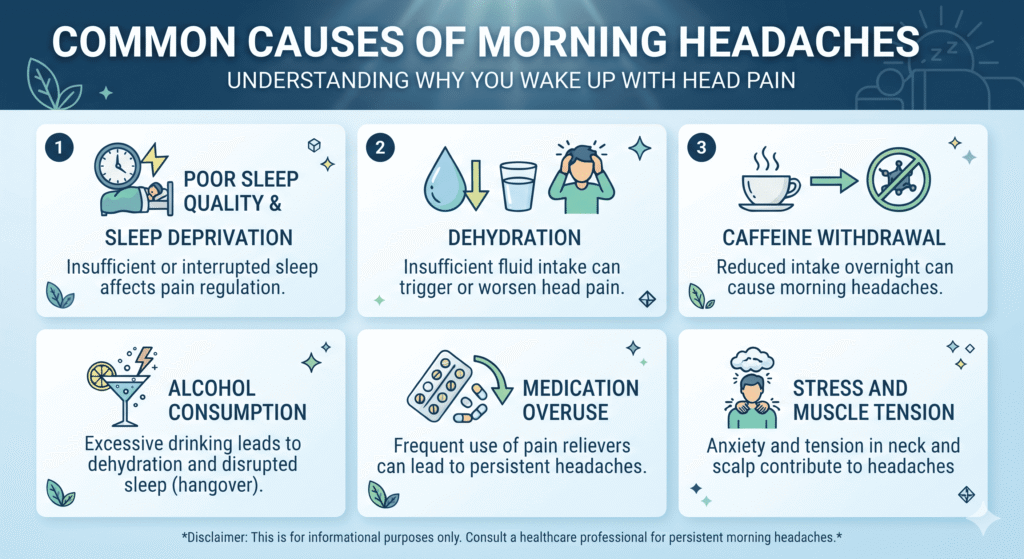
1. Poor sleep quality and sleep deprivation
Not getting sufficient sleep or experiencing frequent interruptions during the night can increase the likelihood of morning headaches. Sleep disturbances may affect the body’s pain regulation mechanisms and increase sensitivity to headache triggers.
People with irregular sleeping schedules or persistent insomnia may be more likely to experience recurring headaches.
2. Dehydration
Insufficient fluid intake can contribute to headaches. When the body does not receive enough fluids, changes in hydration levels may trigger or worsen head pain.
Dehydration may be more likely after excessive sweating, illness, or alcohol consumption.
3. Caffeine withdrawal
Regular caffeine consumption can influence headache patterns. Although caffeine may temporarily relieve certain headaches, reducing or suddenly stopping regular caffeine intake can trigger withdrawal headaches.
These headaches may become noticeable in the morning, particularly when the body has gone several hours without caffeine during sleep.
Drinking excessive amounts of alcohol can contribute to morning headaches, commonly known as hangover headaches. Alcohol can cause dehydration, disturb normal sleep patterns, and contribute to changes in blood sugar levels.
4. Alcohol consumption
These factors may trigger headaches, particularly in individuals who are already susceptible to migraines.
5. Medication overuse
Frequent use of pain-relieving medications can sometimes lead to medication-overuse headaches. These headaches may become more persistent and can be particularly noticeable in the morning as medication levels decrease overnight.
People who regularly take medication for headaches should discuss their usage with a healthcare professional.
6. Stress and muscle tension
Psychological stress and anxiety can contribute to headache disorders. Muscle tension, particularly around the neck, shoulders, and scalp, may also contribute to tension-type headaches. Poor sleep and ongoing stress can further increase the likelihood of waking up with headaches.
Understanding these potential causes can help identify lifestyle-related triggers. However, recurring morning headaches should not automatically be attributed to poor sleep or daily habits without considering other medical explanations.
Can Migraines Cause Headaches Every Morning?
Yes. Migraines are one of the recognised causes of morning headaches. Research suggests that approximately 60% to 70% of people with migraines experience headaches upon waking up.
Migraine is a neurological disorder that can cause recurring episodes of moderate to severe head pain. The pain is often throbbing or pulsating and may affect one or both sides of the head.
People experiencing migraine-related morning headaches may also report:
- Nausea or vomiting.
- Sensitivity to light and sound.
- Difficulty concentrating.
- Visual disturbances or other migraine aura symptoms.
- Increased discomfort during physical activity.
Several factors may explain why migraines occur in the morning.
Hormonal fluctuations: Changes in hormone levels can influence migraine activity. Hormonal variations associated with menstrual cycles, pregnancy, and menopause may increase migraine susceptibility in some individuals.
Changes in the sleep-wake cycle: Migraine attacks can follow a circadian pattern, meaning they may occur more frequently at particular times of the day. Early morning hours are a recognised period for migraine attacks.
Sleep disturbances: Insomnia, irregular sleeping schedules, and poor sleep quality can trigger or worsen migraine episodes.
Medication wearing-off: Some individuals may experience headaches when the effects of medication taken for headache prevention or relief decrease overnight.
Another primary headache disorder associated with morning pain is cluster headache. These headaches can occur at consistent times, particularly during the night or early morning. They typically cause severe pain around one eye or one side of the head and may be accompanied by tearing, nasal congestion, or eye redness.
If you frequently wake up with a headache, especially when accompanied by migraine symptoms, a neurological assessment can help determine whether migraine or another headache disorder is responsible.
How Are Morning Headaches Related to Sleep Disorders?
Sleep and headaches are closely connected. Poor sleep can trigger headaches, while recurring headaches can make it difficult to maintain a healthy sleeping pattern. This relationship may contribute to more frequent or persistent headaches.
Certain sleep disorders are particularly associated with morning headaches.
1. Insomnia and sleep deprivation
Insomnia involves difficulty falling asleep, staying asleep, or obtaining sufficient restorative sleep. People experiencing persistent insomnia may have a higher risk of developing migraine, tension-type headaches, and chronic daily headaches.
Research has also found that morning headaches are more frequently reported among people with insomnia than those without sleep-related difficulties.
When sleep quality is consistently poor, the body’s ability to regulate pain may be affected. This can increase headache susceptibility and contribute to recurring discomfort upon waking.
2. Obstructive sleep apnea (OSA)
Obstructive sleep apnea is a sleep-related breathing disorder in which the upper airway repeatedly becomes partially or completely blocked during sleep. These interruptions can reduce oxygen levels and disturb normal sleep patterns.
People with obstructive sleep apnea may experience:
- Loud or persistent snoring.
- Repeated interruptions in breathing during sleep.
- Waking up with a dry mouth or sore throat.
- Daytime sleepiness and fatigue.
- Difficulty concentrating.
- Headaches after waking up.
Morning headaches associated with sleep apnea are often described as dull, pressure-like, or affecting both sides of the head.
Repeated breathing interruptions can contribute to changes in oxygen and carbon dioxide levels, sleep fragmentation, and blood pressure regulation. These physiological changes may contribute to headache development.
Continuous Positive Airway Pressure (CPAP) therapy is commonly used to manage obstructive sleep apnea. By helping maintain an open airway during sleep, CPAP treatment can improve sleep-related breathing and may reduce morning headaches in affected individuals.
3. Circadian rhythm disturbances
The body’s internal biological clock regulates sleep, wakefulness, and several physiological processes. Disruptions to this rhythm, such as irregular sleeping schedules or frequent changes in sleep timing, may influence headache patterns.
Migraines and cluster headaches can follow circadian patterns, with attacks occurring more frequently during certain hours, including early morning.
If morning headaches occur alongside persistent sleep difficulties, snoring, or excessive daytime sleepiness, evaluating the possibility of an underlying sleep disorder may be an important part of diagnosis.
Other Medical Conditions Associated with Morning Headaches
Although many morning headaches are associated with primary headache disorders or sleep disturbances, some may develop because of underlying medical conditions.
Recognising these possibilities is important, particularly when headaches are new, progressively worsening, or accompanied by other neurological symptoms.
1. Changes in intracranial pressure
Intracranial pressure refers to the pressure inside the skull, which is influenced by brain tissue, blood, and cerebrospinal fluid (CSF).
An increase in intracranial pressure can contribute to headaches that become more noticeable after waking up. Lying down during sleep and changes in pressure regulation may influence symptoms in individuals with certain underlying conditions.
Raised intracranial pressure may sometimes be associated with:
- Persistent or progressively worsening headaches.
- Nausea and vomiting.
- Visual disturbances.
- Headaches that worsen when lying down, coughing, or bending.
Low intracranial pressure, which may occur due to a cerebrospinal fluid leak, can also cause headaches. These are commonly positional, becoming worse when standing or sitting upright and improving when lying down.
The location and timing of the pain, along with other symptoms, help clinicians determine whether further investigation is necessary.
2. Hypertension
Blood pressure changes may sometimes be associated with headaches, particularly when blood pressure rises abruptly to very high levels.
However, mild or moderate chronic hypertension does not usually cause headaches on its own. Severe elevations in blood pressure may require urgent medical assessment, particularly when accompanied by neurological or cardiovascular symptoms.
Blood pressure patterns during sleep may also be relevant. Some individuals do not experience the normal reduction in blood pressure at night, which may be associated with obstructive sleep apnea and other health conditions.
3. Brain tumours and other conditions
Brain tumours are an uncommon but important cause of secondary headaches. In some cases, headaches associated with brain tumours may become more noticeable in the morning or during the night.
This can occur when a tumour or associated swelling affects intracranial pressure.
Other symptoms may include:
- Persistent or progressively worsening headaches.
- Nausea or vomiting.
- New visual difficulties.
- Seizures.
- Weakness or changes in sensation.
- Problems with balance, coordination, or speech.
Not every morning headache indicates a brain tumour. However, headaches that progressively worsen or occur alongside new neurological symptoms require prompt medical evaluation.
4. Anxiety and depression
Psychological conditions, including anxiety and depression, are associated with several headache disorders. Changes in mood, stress levels, and sleep quality may influence how frequently headaches occur.
Anxiety can also interfere with sleep, potentially creating a cycle in which poor sleep contributes to headaches and recurring headaches further affect sleep quality.
5. Medication-related headaches
Certain medications and frequent use of painkillers can contribute to recurring headaches. Medication-overuse headaches may develop when acute headache medications are taken too frequently.
Reviewing medication history is therefore an important part of identifying the cause of persistent morning headaches.
When Should You Consult a Neurologist?
An occasional headache after waking up may not necessarily indicate a serious medical condition. However, recurring headaches, changes in headache patterns, or pain accompanied by additional symptoms should not be ignored.
Consider consulting a neurologist if you experience:
- Headaches almost every morning or several times a week.
- Headaches that are becoming progressively more frequent or severe.
- Morning headaches accompanied by nausea or vomiting.
- Headaches that interfere with work, concentration, or daily activities.
- Frequent headaches alongside sleep disturbances or excessive daytime fatigue.
- Headaches accompanied by visual disturbances, dizziness, or balance problems.
- Persistent headaches that do not improve with appropriate treatment.
When is a morning headache a medical emergency?
Certain symptoms require immediate medical attention rather than a routine consultation. Seek emergency care if you experience:
- A sudden, extremely severe headache that reaches maximum intensity within seconds or minutes.
- A headache accompanied by sudden weakness, numbness, difficulty speaking, or facial drooping.
- A headache with confusion, loss of consciousness, or a seizure.
- A severe headache accompanied by fever and neck stiffness.
- A new severe headache following a significant head injury.
- A severe headache accompanied by sudden vision loss.
These symptoms may indicate a serious neurological or other medical emergency and require urgent evaluation.
Early assessment can help identify the underlying cause and ensure that appropriate treatment is started.
How Are Morning Headaches Diagnosed and Treated?
Diagnosing morning headaches involves identifying the type of headache, understanding its pattern, and evaluating any underlying conditions that may be contributing to the symptoms.
A neurologist generally begins with a detailed medical history and neurological examination.
1. Medical history and symptom assessment
Your doctor may ask questions about:
- When the headaches started.
- How frequently they occur.
- Whether the pain begins during sleep or after waking up.
- The location, intensity, and nature of the pain.
- How long the headache lasts.
- Whether you experience nausea, visual disturbances, or sensitivity to light.
- Your sleeping habits and medication use.
- Any associated medical conditions.
Maintaining a headache diary can also be useful. Recording the timing, severity, duration, possible triggers, and accompanying symptoms can help identify patterns.
2. Neurological examination
A neurological examination helps assess brain and nervous system function. Depending on your symptoms, the assessment may include checking vision, reflexes, muscle strength, coordination, balance, and sensory responses.
3. Imaging and additional investigations
If the medical history or examination suggests an underlying structural or neurological condition, additional investigations may be recommended.
These may include:
- MRI of the brain: Helps examine brain structures and identify abnormalities that may contribute to headaches.
- CT scan: May be recommended in specific situations, particularly when an urgent assessment of possible bleeding or other structural abnormalities is required.
- Sleep study: May be advised when symptoms suggest obstructive sleep apnea or another sleep disorder.
- Blood pressure monitoring: Helps evaluate blood pressure patterns when hypertension is suspected.
- Lumbar puncture: May be considered in selected cases to assess cerebrospinal fluid pressure or investigate specific conditions.
Not every person experiencing morning headaches requires all these investigations. The choice of tests depends on the symptoms and clinical findings.
4. Treatment based on the underlying cause
Treatment for morning headaches depends on the condition responsible for the pain.
- Migraine: Treatment may involve acute medications to relieve attacks and preventive medications to reduce their frequency.
- Tension-type headaches: Stress management, appropriate medication, physical therapy, and strategies to improve sleep may help.
- Sleep apnea: CPAP therapy and other sleep-apnea treatments may help improve breathing during sleep and reduce associated morning headaches.
- Insomnia: Improving sleep habits and appropriate treatment for insomnia can help address sleep-related headache triggers.
- Medication-overuse headaches: A neurologist may recommend a supervised adjustment of frequently used headache medications.
- Intracranial pressure abnormalities: Treatment depends on whether pressure is increased or decreased and may involve medication, procedures, or treatment of the underlying cause.
Alongside medical treatment, maintaining regular sleeping hours, staying adequately hydrated, limiting excessive alcohol consumption, and avoiding abrupt changes in caffeine intake may help reduce certain headache triggers.
The most appropriate approach is an individualised treatment plan based on the diagnosis rather than treating every morning headache in the same way.
Neurological Care for Headaches with Dr. Amit Arora in Dubai
Dr. Amit Arora is a Consultant Neurologist at Fakeeh University Hospital, Silicon Oasis, Dubai, with extensive clinical experience in neurology and additional specialist training in epilepsy and clinical neurophysiology.
His academic and professional qualifications include:
- MBBS.
- MD in Internal Medicine.
- DM in Neurology.
- SCE Neurology from the Royal College of Physicians, UK.
- Fellowship of the European Board of Neurology (FEBN).
Dr. Arora completed a Clinical Epilepsy Fellowship at AIIMS, New Delhi, and received further international training at Cleveland Clinic, Ohio.
His specialist background in neurology supports the assessment of neurological symptoms and conditions requiring detailed clinical evaluation.
If you frequently wake up with headaches, experience persistent head pain, or notice changes in your headache patterns, consider arranging a neurological consultation with Dr. Amit Arora at Fakeeh University Hospital, Dubai.
An appropriate assessment can help investigate the possible cause of your symptoms and determine a suitable treatment approach based on your individual condition.’