Why Are You So Tired After a Seizure?
Feeling extremely tired after a seizure is a common experience. Even after the visible seizure activity stops, a person may continue to experience exhaustion, confusion, headaches, muscle soreness, and difficulty concentrating. These changes occur during the recovery period, when the brain gradually returns to its usual functioning.
The symptoms after a seizure can vary depending on the type of seizure, the area of the brain involved, and the individual’s overall health. Some people regain awareness within minutes, while others need several hours or even days to feel completely normal again. This recovery period is known as the postictal phase.
Understanding post seizure symptoms, their possible causes, and the expected seizure recovery time can help patients and caregivers recognize normal recovery changes and identify signs that require medical attention.
Understanding What Happens After a Seizure
A seizure occurs when there is abnormal, excessive, or synchronized electrical activity in the brain. Depending on its onset and the brain areas involved, it can affect awareness, movement, memory, speech, and other functions.
However, the effects of a seizure do not necessarily end when the episode stops. The brain may continue to experience temporary changes that affect how a person thinks, responds, and feels physically.
What Happens to the Brain and Body After a Seizure?
During a seizure, abnormal electrical activity temporarily disrupts normal communication between nerve cells. Generalized seizures involve electrical activity across both sides of the brain, whereas focal seizures begin in a specific area and may or may not affect awareness.
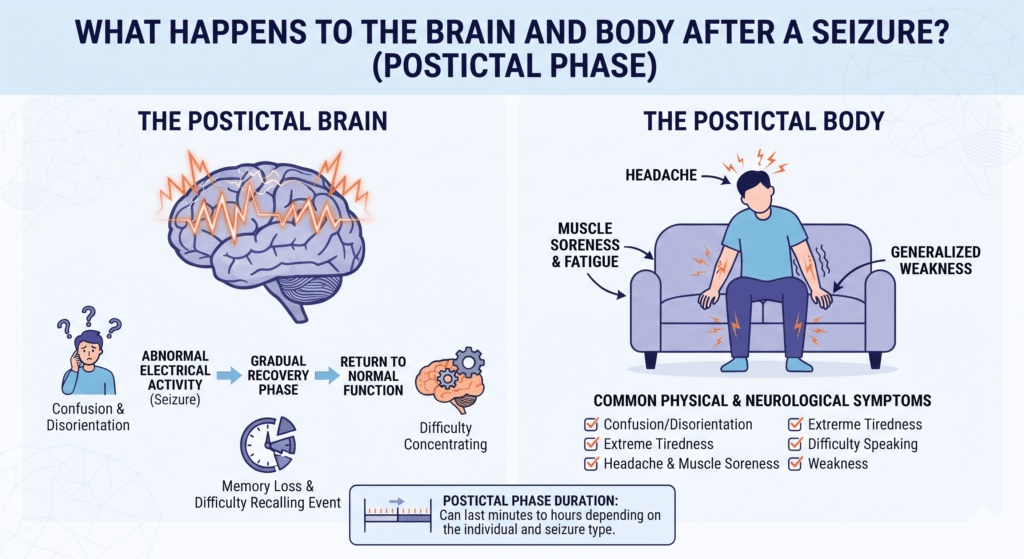
After the seizure ends, the person may experience temporary changes in neurological functioning. These can include confusion, memory loss, reduced responsiveness, headaches, and physical weakness.
The recovery process can also involve physical discomfort. For example, repeated muscle contractions during a tonic-clonic seizure may leave the person feeling sore and exhausted.
The symptoms experienced after an episode depend partly on the type of seizure and the areas of the brain involved.
What Is the Postictal Phase?
The postictal phase is the period immediately following a seizure, during which the brain gradually returns to its usual functioning.
It can involve several temporary neurological and physical changes, including:
- Confusion or disorientation
- Temporary memory loss or difficulty recalling the event
- Extreme tiredness and sleepiness
- Headaches and muscle soreness
- Difficulty speaking or concentrating
- Weakness affecting certain parts of the body
- Changes in mood or behaviour
The duration and severity of these symptoms differ between individuals. Some people recover their awareness quickly, while others may remain confused or drowsy for a longer period.
Why Does the Body Need Time to Recover?
A seizure temporarily affects normal brain activity, and the recovery period allows neurological functioning to return towards its usual state.
During this time, a person may have difficulty processing information, communicating, or remembering what happened. Physical effects, such as muscle soreness and exhaustion, may also contribute to the recovery process.
The underlying cause of a seizure can also influence recovery. In some individuals, infections, metabolic disturbances, medication-related factors, or structural problems in the brain may contribute to the seizure and require further medical evaluation.
Common Symptoms After a Seizure
The symptoms after a seizure are not identical for everyone. Their nature and severity depend on the seizure type, the brain region involved, and whether any complications occurred.Recognizing common epileptic seizure after effects can help patients and caregivers understand the recovery process.
Extreme Tiredness and Fatigue
Extreme tiredness is one of the commonly reported post seizure symptoms. A person may feel physically exhausted and mentally drained even after the seizure has stopped.
This fatigue may be accompanied by reduced alertness, difficulty concentrating, and a strong desire to sleep. Some individuals may need to rest for several hours before resuming their regular activities.
Fatigue after seizure activity can be associated with the postictal recovery process. It may also be influenced by sleep disruption, physical exertion during the seizure, and the effects of prescribed anti-seizure medications.
If tiredness is persistent or interferes with everyday functioning, it is important to discuss it with a neurologist.
Muscle Weakness and Body Pain
Muscle weakness and soreness can occur after seizures involving repeated or forceful muscle contractions. A person may experience discomfort in the arms, legs, shoulders, or other parts of the body.
In some cases, weakness may affect one particular side of the body. This condition can be associated with Todd’s paralysis, also known as Todd’s paresis, which is a temporary neurological deficit following a seizure.
However, one-sided weakness, difficulty speaking, or sudden changes in movement can also indicate a stroke or another neurological emergency. These symptoms should never be assumed to be ordinary post-seizure effects without urgent medical assessment.
Headache and Dizziness
Headaches may develop during the postictal phase. Some individuals experience mild discomfort, while others report more significant headaches.
Dizziness and lightheadedness may also occur, although these symptoms are not specific to seizures and can have other causes.
Persistent or severe headaches, particularly when accompanied by fever, neurological deficits, or a recent head injury, require medical evaluation.
Confusion and Difficulty Concentrating
Confusion is an important feature of the postictal phase. A person may appear disoriented, have difficulty recognizing their surroundings, or struggle to respond to questions.
Temporary memory loss can also occur. Some individuals may not remember the seizure itself or the events immediately following it.
These changes generally improve as the person returns to their usual neurological state. However, prolonged confusion requires medical assessment to rule out ongoing seizure activity or other underlying conditions.
Sleepiness and Low Energy
Sleepiness is another possible symptom after an epileptic seizure. Some individuals may fall into a deep sleep or remain drowsy after regaining consciousness.
They may also experience reduced energy and difficulty returning to their regular routine.
Medication can be another contributing factor. Certain anti-seizure medications are associated with somnolence, cognitive changes, and coordination difficulties. Therefore, persistent sleepiness should be evaluated in the context of the person’s treatment and seizure history.
Why Do You Feel So Tired After a Seizure?
There is no single explanation for fatigue after a seizure. The experience may involve temporary changes in brain functioning, physical exertion, the recovery process, and medication-related effects.
Increased Brain Activity During a Seizure
A seizure involves abnormal and excessive neuronal activity. During the episode, groups of nerve cells communicate in an unusual pattern, affecting different neurological functions.
After the seizure ends, the brain enters the postictal phase. The exact mechanisms behind postictal symptoms are complex and are not fully explained by simply describing the brain as having used up its energy.
Changes in neuronal activity during recovery are thought to contribute to symptoms such as confusion, drowsiness, and reduced responsiveness.
Physical and Mental Exhaustion
Certain seizures, particularly tonic-clonic seizures, involve intense muscle contractions and repetitive movements. These physical effects can leave the person feeling sore and exhausted.Mental exhaustion may occur alongside physical discomfort. A person recovering from a seizure may find it difficult to concentrate, communicate, or process information. The combination of these physical and cognitive effects can make even routine activities feel challenging.
Changes in Brain Function
After a seizure, temporary neurological changes may affect awareness, memory, speech, and movement.
For example, a person may experience post-event amnesia, difficulty recalling information, or temporary weakness. These symptoms can make it difficult to return immediately to normal activities.
A neurological examination is important after the postictal period, once the individual is alert and no longer disoriented. This allows the doctor to assess whether neurological deficits, such as one-sided weakness or speech difficulties, are present. Persistent or unusual deficits require further investigation rather than being automatically attributed to the seizure.
Sleep Disruption After a Seizure
Seizures occurring during sleep can interrupt normal sleep patterns and leave a person feeling tired the following day. Additionally, the postictal phase may involve prolonged sleepiness or a need for additional rest.
Medication can also affect sleepiness and alertness. Some anti-seizure medicines are associated with drowsiness, changes in concentration, and coordination difficulties. If these effects continue, a neurologist can review the patient’s medication and assess whether adjustments or further evaluation are appropriate.
How Long Does It Take to Recover After a Seizure?
Seizure recovery time varies from person to person. Some individuals regain their usual awareness within minutes, while others experience fatigue, confusion, or other symptoms for several hours.
Full recovery may take longer, particularly after a generalized tonic-clonic seizure. The type of seizure, the brain area involved, and the person’s overall health all influence the recovery period.
Factors That Affect Seizure Recovery Time
Several factors can influence how long a person takes to recover after a seizure.
- Type of seizure: Generalized tonic-clonic seizures may involve more noticeable postictal symptoms than some focal seizures.
- Brain area involved: The affected region can influence whether the person experiences memory difficulties, confusion, speech changes, or weakness.
- Duration and severity: Prolonged or repeated seizure activity may require more extensive medical assessment and recovery.
- Underlying cause: Infections, metabolic abnormalities, structural brain conditions, and other provoking factors can affect the patient’s overall condition.
- Medication effects: Anti-seizure medications may contribute to sleepiness, cognitive changes, and coordination difficulties.
- Overall health: Existing medical conditions and individual differences can also influence recovery.
How Long Can Post-Seizure Fatigue Last?
Post-seizure fatigue does not follow a fixed timeline. Some people experience tiredness for a relatively short period, while others may need several hours or days to feel fully recovered.
The recovery period also depends on the type of seizure. Following a focal seizure, some individuals may return to their regular activities relatively quickly. After a tonic-clonic seizure, tiredness, headaches, and muscle soreness may continue for longer.
Persistent fatigue should not automatically be considered a normal consequence of a seizure. It may require assessment for medication side effects, sleep disturbances, or other medical conditions.
When Should You Expect to Feel Normal Again?
There is no universal timeframe for returning to normal after a seizure. Many individuals gradually regain their usual awareness and physical abilities as the postictal symptoms improve.
However, the return to normal functioning should be assessed in relation to the person’s usual seizure pattern and recovery experience.
If the person remains confused, has difficulty responding, or develops new neurological symptoms, medical evaluation is necessary. A doctor may need to investigate whether the symptoms are related to the postictal phase, ongoing seizure activity, or another condition.
How to Manage Fatigue and Weakness After a Seizure?
Recovery after a seizure requires appropriate rest, observation, and attention to the person’s overall health. The following measures can help support a safer recovery.
Get Adequate Rest and Sleep
Rest is important while the person recovers from a seizure. Some individuals may feel sleepy or need additional time before returning to their usual activities.
Caregivers should ensure that the person is breathing normally and can be awakened if they fall asleep. Someone who remains unusually difficult to wake or does not regain their normal responsiveness requires urgent medical assessment.
Maintaining a regular sleep schedule may also help individuals with epilepsy manage potential sleep-related seizure triggers.
Stay Hydrated
Maintaining adequate hydration supports normal bodily functioning. Once the person is fully alert and can swallow safely, they can drink water as needed.
Caregivers should not offer water, food, or oral medication while someone is unconscious, confused to the point of unsafe swallowing, or unable to protect their airway.
Eat Balanced and Nutritious Meals
Once the individual has regained full awareness and can swallow normally, they can return to their usual balanced eating routine.
A varied diet containing adequate protein, carbohydrates, vitamins, and minerals supports general health. However, there is no specific food that has been established to shorten the postictal recovery period.
Patients with epilepsy should discuss any dietary changes with their healthcare professional, particularly if they follow a medically prescribed diet.
Avoid Overexertion During Recovery
Returning to physically demanding activities too soon may increase discomfort when a person is still experiencing fatigue, dizziness, or weakness.
Allow sufficient time for recovery before resuming activities that require full alertness and coordination.
Safety precautions are also important. Individuals who have recently experienced a seizure should avoid swimming or bathing alone, climbing ladders, and handling potentially dangerous equipment until it is safe to resume these activities.
Follow Your Prescribed Epilepsy Treatment Plan
Following the prescribed treatment plan is essential for individuals diagnosed with epilepsy.
Anti-seizure medications should be taken according to the neurologist’s instructions. Missing doses, changing the dosage, or stopping medication without medical advice can affect seizure control.
It is also important to report possible medication-related side effects. Drowsiness, cognitive changes, and coordination difficulties may be associated with certain anti-seizure medications.
A neurologist can review the treatment plan and determine whether additional evaluation or medication adjustments are needed.
When Should You Seek Medical Attention After a Seizure?
Although many post seizure symptoms improve as the person recovers, certain signs require immediate medical attention.
It is particularly important to assess whether the individual has returned to their usual neurological state.
Seek emergency medical assistance in the following situations:
- Fatigue or confusion that does not improve: Persistent disorientation, unusual unresponsiveness, or difficulty waking should be evaluated urgently. Ongoing confusion may require assessment for continued seizure activity or another medical condition.
- Repeated seizures without regaining consciousness: Another seizure occurring before the person regains awareness is a medical emergency and may indicate status epilepticus.
- Breathing difficulties or serious injuries: Abnormal breathing, suspected head injuries, significant bleeding, or other serious injuries require immediate attention.
- New or unusual neurological symptoms: Sudden one-sided weakness, speech difficulties, persistent severe headaches, or other new neurological deficits require urgent evaluation to rule out conditions such as stroke.
- A prolonged seizure: A seizure lasting more than five minutes requires emergency medical assistance.
A first seizure also requires prompt medical evaluation to identify possible underlying causes and assess the risk of recurrence.
A detailed medical history, physical and neurological examination, and appropriate investigations may be necessary. Depending on the clinical findings, these may include blood tests, brain imaging, and electroencephalography (EEG).
Dr. Amit Arora is a Consultant Neurologist at Fakeeh University Hospital, Silicon Oasis, Dubai, with extensive clinical experience in neurology and additional specialist training in epilepsy and clinical neurophysiology.
If you experience persistent fatigue, weakness, memory difficulties, or other changes following seizures, consider arranging a neurological consultation with Dr. Amit Arora to discuss your symptoms and appropriate next steps.
Frequently Asked Questions
Is It Normal to Feel Extremely Tired After a Seizure?
Yes. Extreme tiredness is a commonly reported symptom during the postictal phase. The brain undergoes temporary changes in functioning after a seizure, and the person may also experience physical exhaustion, muscle soreness, and sleepiness. The duration varies between individuals. Persistent or worsening fatigue should be evaluated by a healthcare professional.
How Long Does Fatigue Last After a Seizure?
Fatigue may last from a relatively short period to several hours or days, depending on the type of seizure and the individual’s recovery. Some people regain their usual energy quickly, while others require additional rest. Medication effects and underlying health conditions may also contribute to prolonged tiredness.
Can a Seizure Cause Muscle Weakness?
Yes. Muscle weakness can occur after a seizure, particularly when the episode involves intense muscle contractions. Some individuals may also develop temporary one-sided weakness known as Todd’s paralysis or Todd’s paresis. However, sudden weakness affecting one side of the body can also indicate a stroke and requires urgent medical assessment.
Why Do You Feel Sleepy After an Epileptic Seizure?
Sleepiness is a possible feature of the postictal phase, during which the brain gradually returns to its usual functioning. Some anti-seizure medications can also cause drowsiness and reduced alertness. If sleepiness is unusually prolonged or interferes with everyday activities, a neurologist should assess the possible causes.
How Can You Recover Faster After a Seizure?
Recovery involves allowing the brain and body sufficient time to return to their usual functioning. Getting adequate rest, maintaining hydration once swallowing is safe, avoiding overexertion, and following the prescribed epilepsy treatment plan can support general recovery. Caregivers should also monitor the person’s breathing, awareness, and responsiveness. If recovery is unusually slow or new symptoms appear, medical attention is important.