Seizure First Aid: What to Do When Someone Has a Seizure
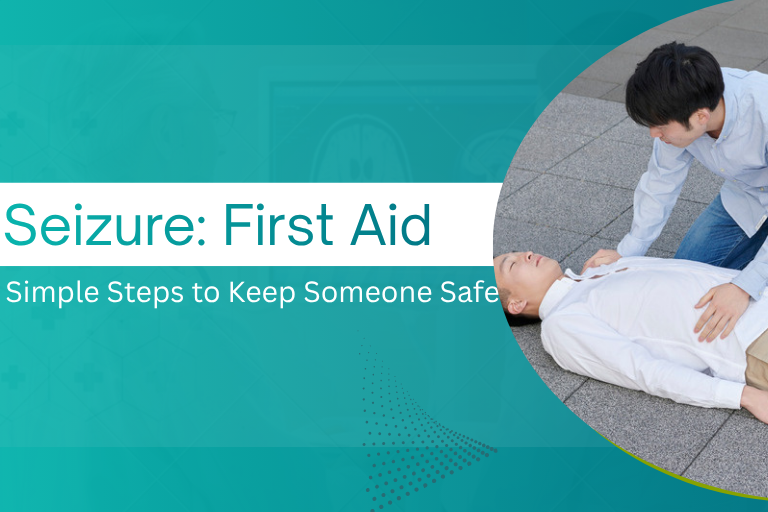
Seeing someone having a seizure for the first time can be very scary. But knowing what steps you take to give first aid when someone has a seizure will keep you calm and allow you to provide some support that protects them from possible injuries.
Most seizures end on their own within a few minutes. Still, providing proper first aid makes all the difference in being able to handle this situation calmly with good outcomes.
During a seizure, people often experience a variety of symptoms, including falling down, stiffness, shaking, strange movements, staring blankly into space, confusion, or temporary loss of awareness. A fits attack is a common way to refer to a seizure seen in day-to-day language, though ‘seizure’ is the preferred term.
Read our guide below about seizure first aid, covering everything you need to know about what to do during and after a seizure, things to avoid doing, as well as scenarios where calling for emergency medical assistance might be required.
What Is a Seizure (Fits Attack)?
A seizure refers to a temporary change in the brain’s electrical activity that might impact your level of awareness, movement, behaviour, sensations, or various other functions.
Your seizure could look entirely unique compared to someone else who also experiences seizures – you could just feel confused or stare blankly for a moment, whereas others may stop being aware of their surroundings, fall down, get stiff, then start having repeated, jerky movements (called an “attack” in certain regions).
However, experiencing a seizure doesn’t always suggest you have an epilepsy disorder, because there are numerous explanations for why this happens. Therefore, consulting with a healthcare professional about these episodes will help determine if additional assessment is necessary.
Read More – Daily Habits That Can Help Reduce Seizure Triggers
What to Do During a Seizure
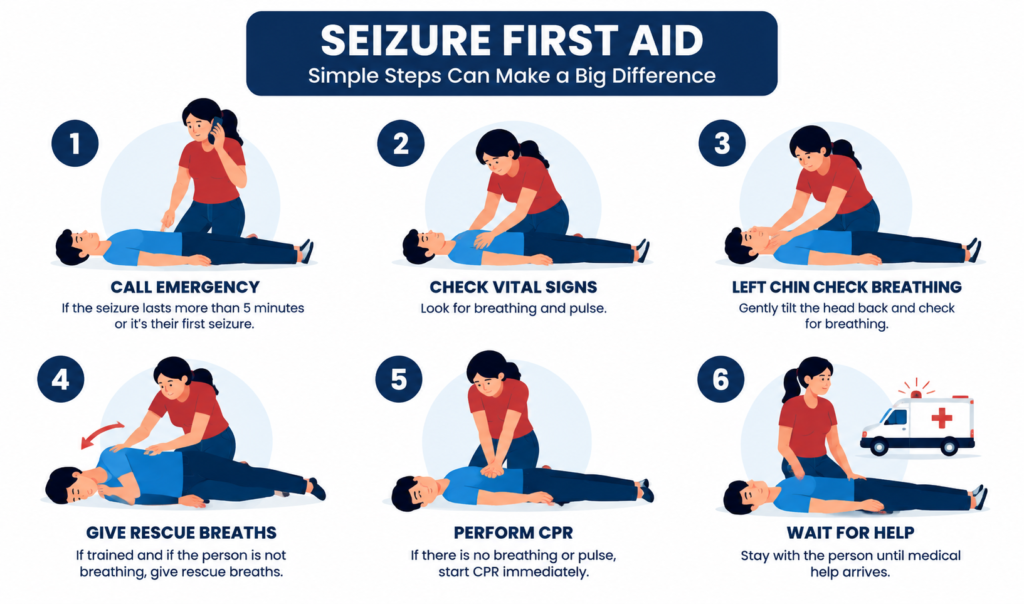
If you are wondering what to do during a seizure, the main goal is to keep the person safe until the seizure ends.
You generally cannot stop a seizure once it has started. Do not try to restrain the person’s movements or put anything in their mouth. Instead, protect them from injury, stay with them, and time the seizure.
Follow these seizure first aid steps:
- Stay calm and stay with the person. Try to keep other people calm as well.
- Help prevent injury. If the person is falling, ease them to the ground if you can do so safely.
- Clear the surrounding area. Move furniture, sharp objects, hot items, or anything else that could cause injury away from them.
- Protect their head. Place something soft and flat, such as a folded jacket, under their head.
- Remove their glasses if they are wearing them.
- Loosen tight clothing around the neck if it could interfere with breathing.
- Turn the person gently onto their side when possible, particularly after the active movements have stopped, to help keep the airway clear.
- Time the seizure. Note when it starts and how long it lasts. This information can be important for medical professionals.
- Stay with them until they recover. Do not leave the person alone immediately after the seizure.
If the person has a medical identification bracelet or another form of medical identification, check it if you can do so without delaying emergency care.
How to Stop a Seizure
There’s an unfortunate reality that many people seek guidance on how to stop a seizure. However, as a bystander, you shouldn’t try to hold someone down or interfere with their movements when they’re seizing. You can safely let them go through the seizure without stopping it if you take steps to keep them safe from harm and monitor how long the episode takes.
Never:
- Hold the person down or restrain their movements
- Putting your fingers, objects, food, water, or medicine in your mouth
- Forcing open their mouth
- Feeding them food or giving them water when they’re unconscious or aren’t fully alert
- Trying mouth-to-mouth breathing
- Moving them unless they’re in immediate danger
These things will only make matters worse – causing injury or choking, which might lead to death. These maneuvers also won’t help to halt seizures.
What to Do After Someone Has a Seizure
It’s equally important to know what to do after a seizure has occurred. After the seizure stops, many people feel confused, tired, weak, or don’t remember anything that happened. Others might need some time to settle back into normal alertness levels.
While there’s no one-size-fits-all response, here’s what you can usually do:
- After the seizure subsides, keep your loved one in a safe position. When appropriate, position them on their side while they’re lying down.
- Stay near them until they’re alert enough to understand what happened.
- Reassure them that the seizure is over.
- Let them take all the time they need to settle down again – avoid forcing them to stand or walk while they’re confused and unsteady.
- Also, check for any injuries sustained during the seizure.
- Don’t offer them food or drink until they’re fully awake and able to swallow normally.
- Help them get home if they’re up and about and don’t need emergency medical assistance.
Follow the seizure action plan (if your loved one has one because they have epilepsy) given to you by their healthcare team.
When to Call Emergency Services
You should call your local emergency medical service (EMS) if you have any of the following:
- Seizure duration greater than 5 minutes.
- Followed by another seizure without regaining consciousness.
- Difficulty breathing, failure to regain consciousness as expected.
- Injury occurred during a seizure.
- A seizure happened in the water.
- It is the person’s first known seizure.
- The person is pregnant.
- The person has diabetes and loses consciousness.
- You are concerned that the person’s condition is an emergency.
Call for help if there’s any doubt. It’s better to get urgent medical advice when you’re uncertain if what you’re experiencing is an emergency instead of trying to handle a possibly critical scenario on your own.
A seizure lasting over five minutes or multiple seizures without regaining consciousness could qualify as a medical emergency. If this happens, prompt treatment is necessary.
Concerned About Seizures or Epilepsy? Consult a Specialist
A single seizure and epilepsy are not necessarily the same thing, and determining the reason for recurrent seizures requires appropriate neurological assessment.
Dr. Amit Arora is a Consultant Neurologist at Fakeeh University Hospital, Silicon Oasis, Dubai, with around 15 years of clinical experience, including approximately 8 years of experience in the UAE. His neurological training includes specialist experience in epilepsy and clinical neurophysiology.
Dr. Arora holds an MBBS, MD in Internal Medicine, and DM in Neurology, along with SCE Neurology from the Royal College of Physicians, UK, and Fellowship of the European Board of Neurology (FEBN). He also completed a Clinical Epilepsy Fellowship at AIIMS, New Delhi, and received further training at Cleveland Clinic, Ohio, in clinical epilepsy and neurophysiology.
For people experiencing recurrent seizures or concerns related to epilepsy, a neurological consultation can help assess the seizure history, symptoms, possible contributing factors, and whether further investigations may be appropriate. Patients with difficult-to-control or recurrent seizures may require specialist assessment to understand their condition and discuss suitable management options.
If you or someone close to you is experiencing recurrent seizures, consult Dr. Amit Arora at Fakeeh University Hospital, Silicon Oasis, Dubai, for a neurological evaluation.
Frequently Asked Questions
1. What should you do when someone has a seizure?
Stay calm and remain with the person. Clear nearby objects that could cause injury, protect their head with something soft, loosen tight clothing around the neck, and time the seizure. Do not restrain them or put anything in their mouth. When possible, gently position them on their side to help keep the airway clear and stay with them until they recover.
2. Can you stop a seizure once it starts?
A bystander generally cannot stop a seizure once it begins. The priority is seizure first aid: protect the person from injury, keep the area clear, time the seizure, and monitor their condition. Do not restrain their movements or put anything in their mouth.
3. What should you never do during a seizure?
Do not hold the person down, attempt to stop their movements, force their mouth open, or put anything inside their mouth. Do not give them food, water, or medicine while they are not fully alert. These actions can cause injury or choking.
4. Is “fits attack” the same as a seizure?
“Fits attack” is a commonly used term in some regions to describe a seizure. A seizure is the medically preferred term. Seizures can present in different ways, including shaking, stiffening, staring, confusion, unusual movements, or temporary loss of awareness.
5. How long is too long for a seizure?
A seizure lasting more than five minutes requires emergency medical attention. Emergency help should also be sought if another seizure starts soon after the first one without recovery, if the person has breathing difficulties, suffers a significant injury, or has another concerning medical circumstance.
6. When should someone with seizures see a neurologist?
A person should consider neurological evaluation after a first known seizure and when seizures are recurring, changing in pattern, difficult to control, or associated with other concerning symptoms. A neurologist can review the person’s history and determine whether further assessment or investigations are needed.