Stroke Symptoms: Warning Signs You Should Never Ignore
A stroke is a medical emergency in which blood flow to part of the brain is interrupted or a blood vessel in the brain bleeds. Recognizing stroke symptoms quickly can make a critical difference, because some stroke treatments are time-sensitive. The earlier a person receives emergency medical assessment, the sooner doctors can determine the type of stroke and whether urgent treatment may be appropriate.
The signs of a stroke can appear suddenly and may include weakness or numbness on one side of the body, difficulty speaking, changes in vision, problems with balance, or a severe headache. Some symptoms may be subtle or disappear after a short time, but they should not be ignored.
Knowing the common symptoms of stroke, remembering the FAST method, and understanding what to do when symptoms appear can help you respond appropriately.
Common Stroke Symptoms
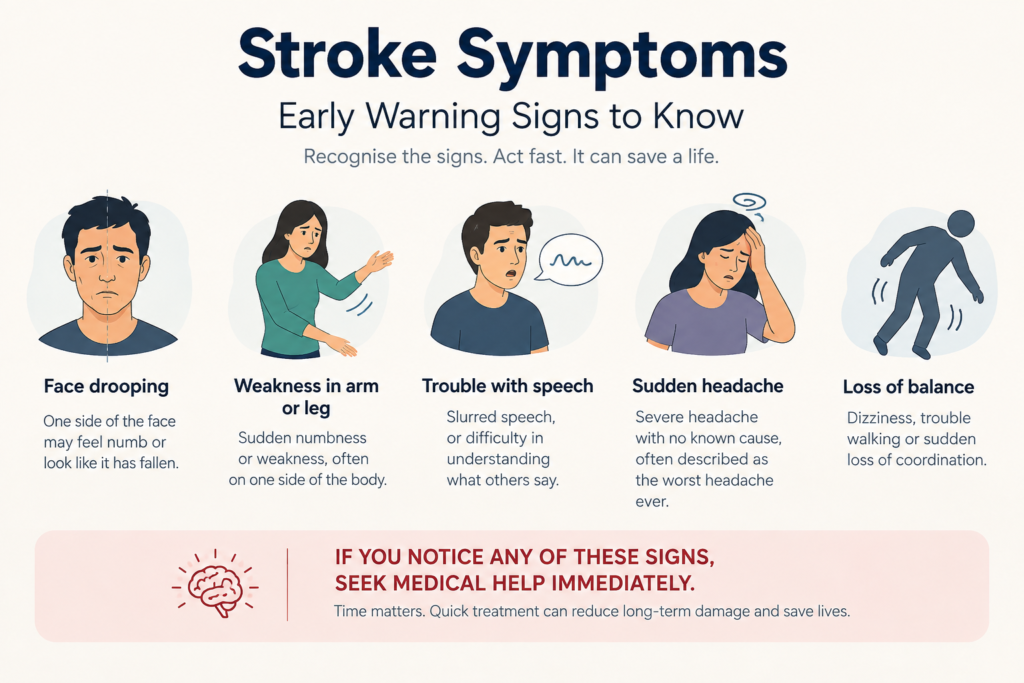
The most common stroke symptoms can appear suddenly and may include:
- Numbness or weakness of the face, arm, or leg, particularly on one side of the body
- Confusion or difficulty understanding what others are saying
- Trouble speaking or slurred speech
- Sudden difficulty seeing in one or both eyes
- Sudden difficulty walking, dizziness, or loss of balance and coordination
- A sudden, severe headache with no known cause
Not every person experiences all of these symptoms. A stroke can affect different parts of the brain, so the symptoms can vary depending on where the problem occurs.
If someone suddenly develops one or more of these symptoms, do not wait to see whether they improve. Treat the situation as a medical emergency and seek emergency medical help immediately.
The FAST Method: Face, Arms, Speech, Time
The FAST method is a simple way to recognize some of the most important warning signs of a stroke:
F – Face:
Ask the person to smile. Does one side of their face droop or appear different from the other?
A – Arms:
Ask the person to raise both arms. Does one arm drift downward or feel weak?
S – Speech:
Ask the person to repeat a simple sentence. Is their speech slurred, strange, or difficult to understand?
T – Time:
If any of these signs are present, time is critical. Call your local emergency medical service immediately and note when the symptoms started or when the person was last known to be well.
The FAST method does not identify every possible stroke symptom, but it can help people recognize several major warning signs quickly.
Early Signs of a Stroke
Some early signs of stroke can be subtle, particularly when symptoms are brief or disappear before the person seeks medical attention.
A transient ischemic attack (TIA), sometimes called a mini-stroke, occurs when blood flow to part of the brain is temporarily interrupted. Its symptoms can resemble those of a stroke, including sudden weakness or numbness, speech difficulties, vision changes, dizziness, or problems with balance.
Because TIA symptoms may resolve within minutes or hours, people sometimes assume that the danger has passed. However, temporary symptoms still require urgent medical assessment because a TIA can be a warning sign of a potential future stroke.
Other stroke early symptoms may be overlooked when they are mild, such as:
- Brief difficulty finding or understanding words
- Temporary weakness or numbness on one side
- Sudden vision changes
- Short episodes of dizziness or loss of balance
- Sudden difficulty walking
- Temporary facial weakness or drooping
- A sudden, unexplained change in coordination
It is not possible to determine the seriousness of these symptoms simply because they improve. If you experience sudden neurological symptoms, seek urgent medical assessment rather than assuming they were harmless.
What to Do If You Notice Stroke Symptoms
If you notice possible stroke symptoms in yourself or someone else, take action immediately.
1. Call emergency services
Do not wait for symptoms to disappear. Contact your local emergency medical service as soon as possible.
2. Note when symptoms started
Try to establish the exact time the symptoms began. If you do not know the exact time, note when the person was last known to be well. This information can be important when doctors determine which emergency treatment options may be appropriate.
3. Keep the person safe
Help them remain in a safe position while waiting for medical assistance. Do not allow them to drive themselves to the hospital.
4. Do not give food, drinks, or medication unless instructed
A person experiencing a stroke may have difficulty swallowing, which can increase the risk of choking. Avoid giving them anything by mouth unless directed by medical professionals.
5. Do not delay emergency assessment
Even if the symptoms improve or disappear, the person still needs urgent medical evaluation. Temporary symptoms can occur with a TIA and should not simply be dismissed.
Why Acting Quickly Matters During a Stroke?
The brain depends on a continuous supply of oxygen and nutrients through the bloodstream. When blood flow is blocked or a blood vessel ruptures, brain cells can become damaged.
This is why stroke is often described as a time-sensitive emergency. Early medical assessment allows doctors to determine whether the symptoms are caused by a stroke, TIA, or another condition and to identify the appropriate course of care.
The treatment approach also depends on the type of stroke. Ischaemic stroke, which results from a blocked blood vessel, and haemorrhagic stroke, which involves bleeding in the brain, require different medical approaches.
For this reason, someone with suspected stroke symptoms should be assessed urgently rather than attempting to diagnose or treat the condition at home.
Recovering From a Stroke or Concerned About Risk? Get Expert Care
Stroke care does not necessarily end after the initial emergency has been managed. Follow-up neurological assessment may be important for understanding the cause of a stroke or TIA, managing risk factors, monitoring recovery, and addressing ongoing neurological symptoms.
Dr. Amit Arora is a Consultant Neurologist at Fakeeh University Hospital, Silicon Oasis, Dubai, with around 15 years of clinical experience, including approximately 8 years of experience in the UAE.
He holds an MBBS, MD in Internal Medicine, and DM in Neurology, along with SCE Neurology from the Royal College of Physicians, UK, and Fellowship of the European Board of Neurology (FEBN). His specialist neurological training includes a Clinical Epilepsy Fellowship at AIIMS, New Delhi, as well as further training at Cleveland Clinic, Ohio.
Dr. Arora has experience across a broad range of neurological conditions and takes a patient-focused approach to neurological assessment and care. For individuals recovering from a stroke, experiencing a TIA, or seeking neurological evaluation after concerning symptoms, a specialist consultation can help determine appropriate follow-up and next steps.
If someone is experiencing active or sudden stroke symptoms, call emergency services immediately rather than waiting for a scheduled consultation. For follow-up neurological care or assessment after a stroke or TIA, you can consult Dr. Amit Arora at Fakeeh University Hospital, Silicon Oasis, Dubai.
Frequently Asked Questions
1. What are the most common symptoms of a stroke?
Common stroke symptoms include sudden weakness or numbness, particularly on one side of the body, facial drooping, difficulty speaking or understanding speech, sudden vision problems, dizziness or difficulty walking, loss of balance, and sometimes a sudden severe headache. Symptoms can vary depending on the part of the brain affected.
2. What is the FAST method for recognizing a stroke?
FAST stands for Face, Arms, Speech, and Time. Ask the person to smile and look for facial drooping, ask them to raise both arms and check for weakness or downward drifting, and ask them to repeat a sentence to identify speech problems. If any of these signs appear suddenly, Time is critical—call emergency services immediately.
3. What are the early or subtle signs of a stroke?
Early signs can include sudden temporary weakness or numbness, difficulty speaking, vision changes, dizziness, problems with balance, or facial weakness. These symptoms may occur with a TIA and can disappear after a short period. Even if symptoms resolve, urgent medical assessment is important.
4. Can stroke symptoms come and go?
Yes. Symptoms can sometimes improve or disappear, particularly during a transient ischemic attack (TIA). However, temporary symptoms should not be ignored. A TIA can be a warning sign of a potential future stroke and requires urgent medical evaluation.
5. What should you do immediately if someone shows stroke symptoms?
Call your local emergency medical service immediately. Note the time the symptoms started, or the last time the person was known to be well. Keep the person safe and do not allow them to drive themselves. Do not delay emergency assessment even if the symptoms begin to improve.
6. When should you see a neurologist after a stroke?
Neurological follow-up may be appropriate after a stroke or TIA to assess recovery, understand the neurological condition, evaluate possible causes, and plan ongoing care. The timing and type of follow-up depend on the individual’s condition and the recommendations of their treating medical team.
If new or sudden stroke-like symptoms occur, do not wait for a neurologist appointment—seek emergency medical care immediately.