Headaches are common, but not every headache has the same cause or feels the same. A tension headache is one of the most common types of headache and is often described as a dull ache, pressure, or a tight band around the head. It may occur occasionally or become frequent enough to interfere with work, sleep, and daily activities.
Stress, muscle tension, poor posture, lack of sleep, and other lifestyle factors can contribute to headaches. Understanding the symptoms, possible triggers, and available treatment options can help you manage them more effectively and recognise when medical evaluation is needed.
What Is a Tension Headache?
A tension headache, also called a tension-type headache, typically causes mild to moderate pain or pressure rather than the intense throbbing often associated with migraine. The discomfort may be felt across the forehead, temples, sides, or back of the head and may be accompanied by tenderness in the scalp, neck, or shoulder muscles.
Although tension headaches are common, their exact underlying mechanism is not completely understood. Increased sensitivity in the body’s pain-processing system may play a role, while factors such as stress and muscle tenderness can act as triggers or contribute to symptoms.
Tension Headache Symptoms
The symptoms of a tension headache can vary from person to person, but they usually involve pressure or aching rather than severe, pulsating pain.
Common Symptoms of Tension Headache
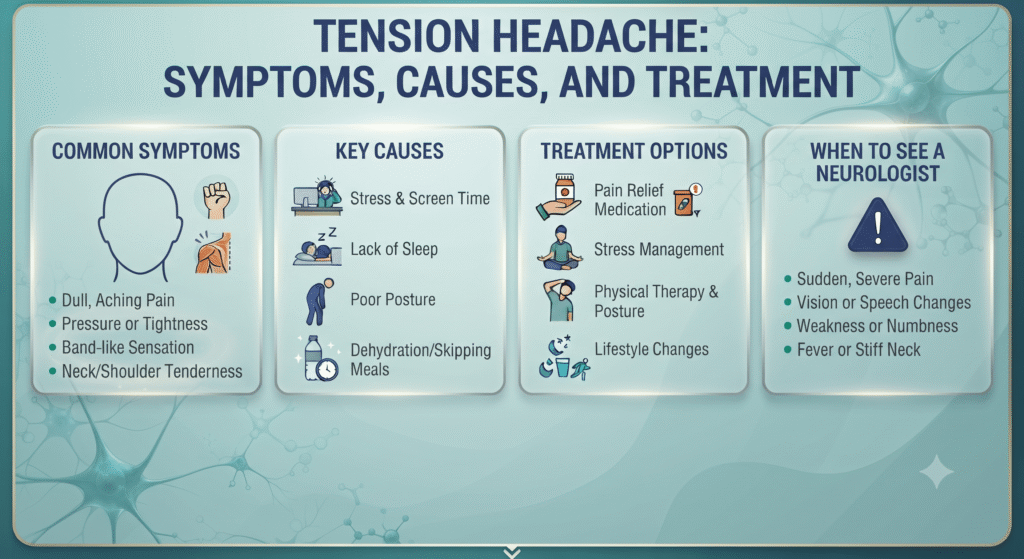
Common symptoms may include:
- Dull, aching pain in the head
- Pressure or tightness around the forehead or temples
- A feeling of a band being wrapped around the head
- Pain on both sides of the head
- Tenderness in the scalp, neck, or shoulder muscles
- Neck stiffness or muscle tightness
- Mild sensitivity to light or sound in some people
Tension headaches can develop gradually and may last from around 30 minutes to several hours. Some episodes can last for several days, particularly in people who experience frequent or chronic headaches.
What Causes Tension Headaches?
There is not always one identifiable cause of a tension headache. Several physical, emotional, and lifestyle factors may contribute to the onset or worsening of symptoms.
Stress and Emotional Tension
Stress is one of the most commonly reported triggers of tension-type headaches. During periods of stress, people may unconsciously tense their shoulders, neck, jaw, or scalp muscles. Stress can also affect sleep and daily routines, which may further increase the likelihood of headaches.
Poor Posture and Neck Strain
Sitting for long periods with the head tilted forward, working at a poorly positioned desk, or holding a phone in an awkward position can place additional strain on the neck and shoulder muscles. This may contribute to head and neck discomfort in some people.
Lack of Sleep
Insufficient or irregular sleep can contribute to headaches. Poor sleep may also increase sensitivity to pain and make it more difficult for the body to cope with everyday stressors.
Screen Time and Eye Strain
Long periods of uninterrupted screen use may contribute to headaches, particularly when combined with poor posture, inadequate breaks, or an unsuitable workstation setup. Regular breaks and appropriate screen positioning can help reduce physical strain.
Dehydration and Skipping Meals
Not drinking enough fluids or going for long periods without eating may trigger headaches in some people. Maintaining regular meals and adequate hydration can be part of a healthy headache-prevention routine.
Stress Tension Headache: Can Stress Cause Headaches?
Yes, stress can trigger or worsen a stress tension headache. Everyday pressures, emotional strain, demanding work schedules, and ongoing worry can all contribute to headache episodes.
Stress may affect headaches in several ways. A person may tense the muscles around the neck and shoulders, clench their jaw, sleep poorly, skip meals, or spend more time sitting in one position. These changes can contribute to headache symptoms.
However, it is important not to assume that every headache is caused by stress. Headaches can have many causes, and frequent or changing headaches should be assessed by a healthcare professional.
Neck Tension Headache: Causes and Symptoms
A neck tension headache may occur alongside tightness or discomfort in the neck and shoulders. Prolonged sitting, poor workstation posture, repetitive movements, and sustained neck positioning can place strain on these areas.
Symptoms may include:
- Tight or aching neck muscles
- Pain spreading from the neck toward the back or sides of the head
- Pressure around the temples or forehead
- Shoulder stiffness
- Headache after prolonged desk or screen use
Neck-related symptoms can overlap with several types of headache. Therefore, persistent headaches accompanied by significant neck pain should not automatically be attributed to muscle tension without appropriate evaluation.
Types of Tension Headaches
Tension-type headaches are generally classified according to how frequently they occur.
Episodic Tension Headaches
Episodic tension headaches occur occasionally and may be infrequent or frequent. Frequent episodic tension-type headache is generally defined as occurring on fewer than 15 days per month for at least three months.
Frequent Tension Headaches
Frequent tension headaches occur repeatedly over a period of months. Keeping a headache diary can be useful for identifying how often headaches occur and whether certain triggers appear to be associated with them.
Chronic Tension Headaches
Chronic tension-type headaches occur on 15 or more days per month for more than three months. They may last for hours and can sometimes feel almost continuous. Because frequent headaches can affect daily functioning and quality of life, medical assessment is important.
Tension Headache vs Migraine
Tension headaches and migraines can sometimes be confused, but they have several differences.
A tension headache commonly causes mild to moderate, pressing or tightening pain, often on both sides of the head. Physical activity usually does not make the pain significantly worse.
Migraine, on the other hand, is often associated with moderate to severe throbbing or pulsating pain and may occur on one side of the head. Nausea, vomiting, and increased sensitivity to light or sound can also occur.
However, symptoms can overlap, and not every migraine follows a typical pattern. A healthcare professional can help distinguish between different headache types based on the symptoms and medical history.
How Are Tension Headaches Diagnosed?
There is usually no single test that confirms a tension headache. Diagnosis is primarily based on the patient’s symptoms, medical history, and physical and neurological examination.
Medical History and Symptoms
A neurologist may ask about:
- When the headaches started
- How frequently they occur
- Where the pain is located
- What the pain feels like
- How long each episode lasts
- Possible triggers
- Sleep patterns and stress levels
- Other symptoms that occur with the headache
- How often pain-relief medicines are being used
Keeping a headache diary can provide useful information about patterns and potential triggers.
Neurological Examination
A neurological examination may assess areas such as strength, sensation, coordination, reflexes, vision, and other neurological functions. The examination helps determine whether the symptoms are consistent with a primary headache disorder or whether further evaluation may be needed.
When Are Imaging Tests Needed?
Brain imaging is not routinely required for every tension headache. However, an MRI or CT scan may be considered when the symptoms, examination, medical history, or changes in headache pattern raise concern about another underlying cause.
Tension Headache Treatment
Treatment depends on the frequency and severity of headaches, associated symptoms, possible triggers, and the individual’s overall health.
Lifestyle Changes and Self-Care
For occasional headaches, simple measures may help. These can include adequate hydration, regular meals, sufficient sleep, physical activity, relaxation, and taking breaks from prolonged screen use.
Applying a warm compress to tense neck and shoulder muscles or using a cold compress may also provide relief for some people.
Stress Management
Because stress is a common headache trigger, learning effective ways to manage stress may reduce the frequency or severity of headaches.
Deep breathing, relaxation exercises, meditation, regular physical activity, and counselling or behavioural approaches may be useful depending on the individual’s needs.
Pain-Relief Medication
Occasional tension headaches may be treated with appropriate over-the-counter pain-relief medicines. However, frequent or repeated use of headache medicines can contribute to medication-overuse headaches.
For this reason, people who regularly need pain medication for headaches should discuss their symptoms and medication use with a healthcare professional rather than continuing to self-treat.
Physical Therapy and Posture Correction
When neck and shoulder tension or poor posture contributes to headache symptoms, physical therapy, stretching, ergonomic adjustments, and posture correction may be considered.
Improving desk setup, keeping screens at an appropriate height, changing positions regularly, and avoiding prolonged forward-head posture may help reduce physical strain.
Treatment for Chronic Tension Headaches
Chronic tension headaches may require a more structured treatment plan. Depending on the individual, a neurologist may recommend preventive treatment, behavioural approaches, physical therapy, or other therapies.
The aim is not simply to manage individual episodes but to reduce headache frequency, identify contributing factors, and improve daily functioning.
How to Prevent Tension Headaches
Preventing tension headaches often involves identifying personal triggers and maintaining consistent healthy habits.
Helpful strategies may include:
- Maintain a regular sleep schedule
- Eat meals at regular intervals
- Stay adequately hydrated
- Exercise regularly
- Take frequent breaks during prolonged screen use
- Maintain good sitting and standing posture
- Stretch the neck and shoulders regularly
- Find practical ways to manage stress
- Limit excessive caffeine intake
- Keep a headache diary if headaches occur frequently
A headache diary can help identify patterns involving sleep, food, stress, screen time, physical activity, and other potential triggers.
When Should You See a Neurologist for a Tension Headache?
Occasional mild headaches may improve with rest and lifestyle measures. However, you should consider seeing a neurologist if headaches are becoming frequent, severe, persistent, or different from your usual pattern.A neurological evaluation may be particularly useful when headaches interfere with work, sleep, or everyday activities, when you regularly need pain-relief medication, or when the diagnosis is unclear.A neurologist can assess the headache pattern, identify possible triggers, distinguish tension headaches from migraine and other headache disorders, and determine whether additional testing or specialist treatment is appropriate.
If you experience recurring headaches, understanding the underlying pattern is an important part of effective care. Dr. Amit Arora, Consultant Neurologist at Fakeeh University Hospital, Dubai Silicon Oasis, has over 15 years of clinical experience in neurological care, with expertise that includes headaches and other neurological disorders. His approach involves detailed neurological evaluation, identifying potential headache triggers, differentiating tension headaches from migraines and other headache disorders, and developing treatment plans based on the individual’s symptoms and needs. Patients can also receive guidance on lifestyle measures, preventive strategies, and further evaluation when required.
Book an Appointment with Dr. Amit Arora to discuss recurring or persistent headaches and receive an appropriate neurological assessment and personalised care plan.