A headache that keeps returning or lasts for a prolonged period can affect concentration, sleep, work, and everyday activities. While occasional headaches are common, a chronic or severe headache may require a closer evaluation, particularly when the pain becomes frequent, changes in pattern, or occurs with other symptoms. Understanding the possible causes, symptoms, triggers, and treatment options can help determine when medical assessment may be appropriate.
What Is a Chronic Headache?
A chronic headache refers to headaches that occur frequently over an extended period. The term does not describe just one type of headache. Several headache disorders, including chronic migraine and chronic tension-type headache, can cause persistent or frequently recurring pain.
Chronic headaches may vary in location, intensity, duration, and associated symptoms. Some people experience headaches on most days, while others may have recurring episodes separated by periods of relief.
How Is Chronic Headache Different From an Occasional Headache?
An occasional headache may occur because of factors such as stress, dehydration, lack of sleep, or illness and often improves when the underlying trigger is addressed. A chronic headache, however, follows a recurring pattern and may interfere with daily activities.
The frequency, duration, and characteristics of the headache are important when determining the possible underlying headache disorder.
What Does a Chronic Headache Feel Like?
The experience of chronic headache can differ from person to person. Pain may be mild, moderate, or severe and may occur in different areas of the head.
Common Chronic Headache Symptoms
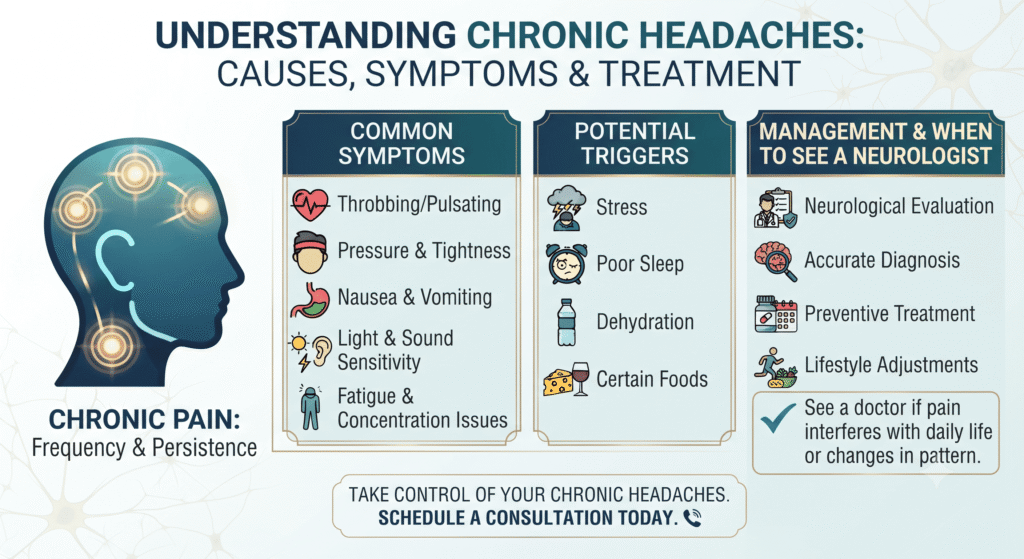
Depending on the underlying cause, symptoms may include:
- Persistent or recurring head pain
- Pressure or tightness around the head
- Throbbing or pulsating pain
- Pain affecting one or both sides of the head
- Pain around the forehead, temples, or back of the head
- Sensitivity to light or sound
- Nausea or vomiting
- Fatigue or difficulty concentrating
- Neck or shoulder discomfort
The pattern of symptoms can provide important clues about the type of headache involved.
What Causes Chronic Headaches?
There is no single cause of chronic headache. Different headache disorders can have different underlying mechanisms and triggers.
Possible contributors include:
- Chronic migraine
- Chronic tension-type headache
- Medication-overuse headache
- Sleep problems
- Stress and emotional strain
- Dehydration
- Irregular meals
- Excessive caffeine or sudden caffeine withdrawal
- Certain medical conditions
- Hormonal changes
- Vision-related or neck-related factors in some individuals
Sometimes, a headache may begin as an occasional problem and gradually become more frequent. Identifying the pattern and potential contributing factors is an important part of neurological assessment.
What Can Trigger Chronic Headaches?
Certain factors may contribute to or worsen recurring headaches. Common triggers can include:
- Poor or irregular sleep
- Stress
- Dehydration
- Skipping meals
- Excessive caffeine
- Alcohol
- Bright lights or prolonged screen exposure
- Changes in routine
- Hormonal changes
- Certain foods or individual dietary triggers
- Overuse of some headache medications
Keeping a headache diary can help identify patterns between symptoms, daily activities, and potential triggers.
When Is a Headache Considered Chronic?
The definition of a chronic headache depends on the specific headache disorder. For example, chronic migraine is generally defined by headaches occurring on at least 15 days per month for more than three months, with migraine features on at least eight of those days.
Because different headache disorders have different diagnostic criteria, frequent headaches should not automatically be assumed to represent chronic migraine. A neurological evaluation can help establish the underlying pattern.
How Are Chronic Headaches Diagnosed?
Diagnosis generally begins with a detailed medical history and assessment of the headache pattern.
A neurologist may ask about:
- When the headaches started
- How frequently they occur
- How long each episode lasts
- Where the pain occurs
- The severity and character of the pain
- Associated symptoms
- Possible triggers
- Current medications
- Sleep and lifestyle patterns
- Previous headache treatments
A neurological examination may also be performed. Depending on the symptoms and examination findings, MRI or other investigations may be recommended to rule out secondary causes of persistent or recurrent headache.
Chronic Headache Treatment
Treatment depends on the type of headache, its frequency, severity, triggers, and the individual’s overall health.
Treatment for Headache Episodes
Depending on the diagnosis, treatment may include appropriate medications to manage headache episodes. The choice of treatment should be based on the specific headache disorder and individual medical circumstances.
Taking headache medicines too frequently can itself contribute to medication-overuse headache, making appropriate medical guidance important for people experiencing frequent pain.
Preventive Treatment for Chronic Headaches
When headaches occur frequently, preventive treatment may be considered. Depending on the diagnosis, this can involve:
- Preventive medications
- Identifying and managing triggers
- Improving sleep routines
- Maintaining regular meals and hydration
- Managing stress
- Monitoring headache frequency and severity
- Regular neurological follow-up when required
The goal of preventive management is to reduce the frequency and impact of headaches while addressing factors that may contribute to their recurrence.
Chronic Headache vs Other Types of Headache
Chronic headache is a broad term, while migraine, tension-type headache, and cluster headache are specific headache disorders.
| Feature | Chronic Headache | Migraine | Cluster Headache |
| Pattern | Frequently recurring headaches | Recurrent attacks | Repeated attacks during cluster periods |
| Pain location | Can vary | Often one-sided | Usually one-sided, often around one eye |
| Pain quality | May vary | Often throbbing or pulsating | Often severe, sharp, burning, or stabbing |
| Associated symptoms | Depend on the underlying disorder | Nausea and light/sound sensitivity may occur | Eye and nasal symptoms are common |
| Frequency | Can occur frequently over months | Varies between individuals | Multiple attacks may occur in a day |
| Treatment approach | Depends on the underlying cause | Acute and preventive treatment may be used | Acute and preventive treatment are commonly considered |
Because different headache disorders can share certain symptoms, an accurate diagnosis is important before selecting a treatment approach.
When Should You See a Neurologist for Chronic Headaches?
Consider seeking neurological assessment if headaches:
- Occur frequently or keep returning
- Become more severe or persistent
- Change in their usual pattern
- Begin interfering with work, sleep, or daily activities
- Require frequent use of pain-relieving medication
- Occur with vision, speech, balance, weakness, numbness, or other neurological symptoms
- Do not improve with the measures that previously helped
A chronic or severe headache should also receive prompt medical attention when it is sudden and unusually intense or accompanied by concerning neurological or systemic symptoms.
Chronic Headache Evaluation in Dubai with Dr. Amit Arora
Recurring or severe headaches deserve an accurate neurological assessment, particularly when they follow a persistent or recurring pattern. Dr. Amit Arora, Consultant Neurologist at Fakeeh University Hospital, Dubai Silicon Oasis, has over 15 years of clinical experience and expertise in headaches and other neurological disorders.
Dr. Arora evaluates headache patterns, associated symptoms, potential triggers, and neurological findings to help determine whether symptoms are consistent with chronic headache, migraine, cluster headache, or another headache disorder. Based on the individual’s condition, he can guide patients regarding appropriate acute treatment, preventive management, trigger identification, and further investigation when required.
His approach combines evidence-based neurological care with personalised treatment planning and patient education.
Book an Appointment with Dr. Amit Arora to discuss recurring headaches, persistent head pain, or other concerning headache symptoms and receive an appropriate neurological evaluation.
Frequently Asked Questions (FAQs)
What is a chronic headache?
A chronic headache is a headache that occurs frequently over an extended period. It can result from different headache disorders, so identifying the specific pattern is important.
What causes chronic headaches?
Chronic headaches can have several possible causes or contributing factors, including chronic migraine, tension-type headaches, medication overuse, sleep problems, stress, dehydration, and other medical conditions.
Can chronic headaches occur every day?
Yes. Some headache disorders can cause pain on most days. Frequent headaches should be assessed by a healthcare professional to determine the underlying cause.
Is chronic headache the same as migraine?
No. Chronic headache is a broad description of frequent or persistent headaches, while migraine is a specific neurological disorder. Chronic migraine is one possible cause of frequent headaches.
Can stress cause chronic headaches?
Stress can trigger or worsen some types of headaches, but persistent headaches should not automatically be attributed to stress. Other potential causes and contributing factors may need to be considered.
Can chronic headaches be prevented?
Depending on the underlying headache disorder, preventive treatment and lifestyle measures may help reduce headache frequency. A neurologist can recommend an approach based on the individual’s symptoms and diagnosis.
When should I see a neurologist for chronic headaches?
A neurological assessment may be appropriate when headaches are frequent, severe, persistent, changing in pattern, affecting daily life, or associated with neurological symptoms.