Migraine vs Headache: How to Tell the Difference?
Headache is one of the most common health complaints worldwide. Many people use the words migraine and headache as if they mean the same thing, but they are different conditions. Every migraine is a type of headache, but not every headache is a migraine.
Knowing the distinction between a migraine and a headache is useful in identifying symptoms, managing triggers, and getting the correct medical assistance.
Headache is categorized in the WHO (World Health Organization) database as one of the most prevalent health conditions in the world. Among the most common types of headaches, migraine affects nearly one billion people globally and is one of the leading causes of disability in individuals below the age of 50 years.
So how do you know whether you are dealing with a simple headache or a migraine? Let’s understand it in easy terms.
What Is a Headache?
HHeadache is a pain and/or discomfort perceived at the head, scalp, or neck region. Head pain is a result of a number of factors with the most common triggers being:
- Dehydration
- Eye strain
- Hunger
- Fever
- Stress
- Sleep
- Poor posture
- Sinus congestion
Headaches can range from mild to severe. Some last for a short time, while others may continue for hours.
Common Types of Headaches
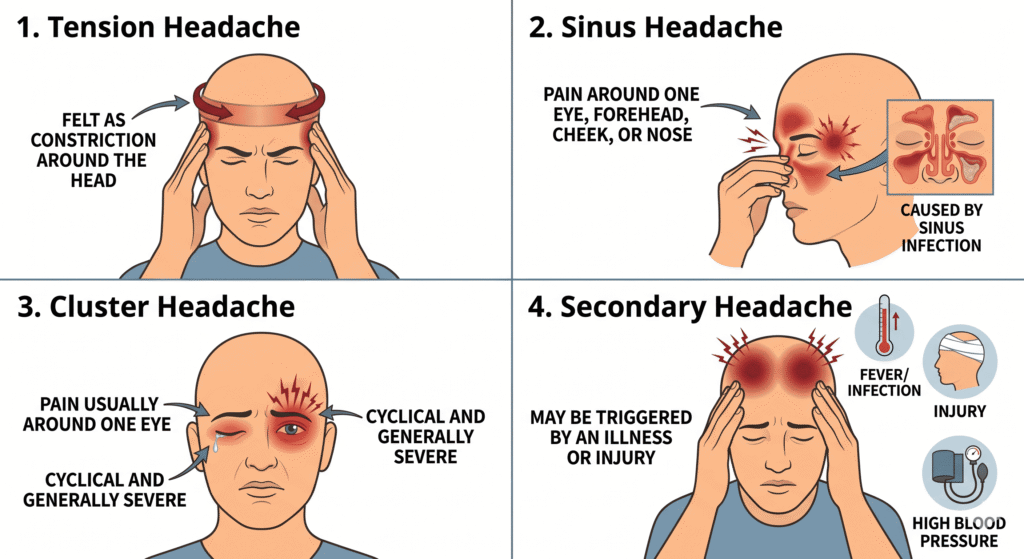
1. Tension Headache
This is the most frequent headache. A tension headache is characterized by a feeling of constriction around the head.
2. Sinus Headache
This is a headache that is caused by sinus infection. The pain and discomfort occur in the forehead, cheek, or nose.
3. Cluster Headache
This headache is cyclical and generally severe. The pain is usually around one eye.
4. Secondary Headache
Secondary headaches may be triggered by an illness such as an infection or fever, as well as injuries or high blood pressure.
What Is a Migraine?
A migraine is an intense neurological disorder which presents as a type of a headache, plus a variety of other symptoms. This condition involves more than a strong headache.
Migraine attacks may last from 4 hours to 72 hours if untreated. Some people get migraines occasionally, while others experience frequent attacks.
Migraines are affected by a variety of global factors, including differences in demographics; women are more likely to be affected than men. This is, in part, attributable to changes in hormones.
Difference Between Migraine and Headache
Here is a simple comparison to understand the difference between migraine and headache:
| Feature | Headache | Migraine |
| Pain Type | Mild to moderate pressure or dull pain | Moderate to severe throbbing or pulsating pain |
| Location | Whole head, forehead, or back of head | Often one side, but can affect both sides |
| Duration | 30 minutes to several hours | 4 to 72 hours |
| Nausea | Rare | Common |
| Light/Sound Sensitivity | Uncommon | Very common |
| Physical Activity Effect | Usually manageable | Often worsens pain |
| Visual Symptoms | Rare | Can occur (aura) |
How Migraine Feels in Real Life
A tension headache can be compared to the feeling of a cap being too tight after a long day. Migraine can feel like a sharp throbbing pain and come with nausea, being bothered by bright lights and feeling unfocused. Resting in a dark and quiet space is a necessity for a lot of migraine sufferers and is eventually how symptoms become better.
Common Migraine Symptoms
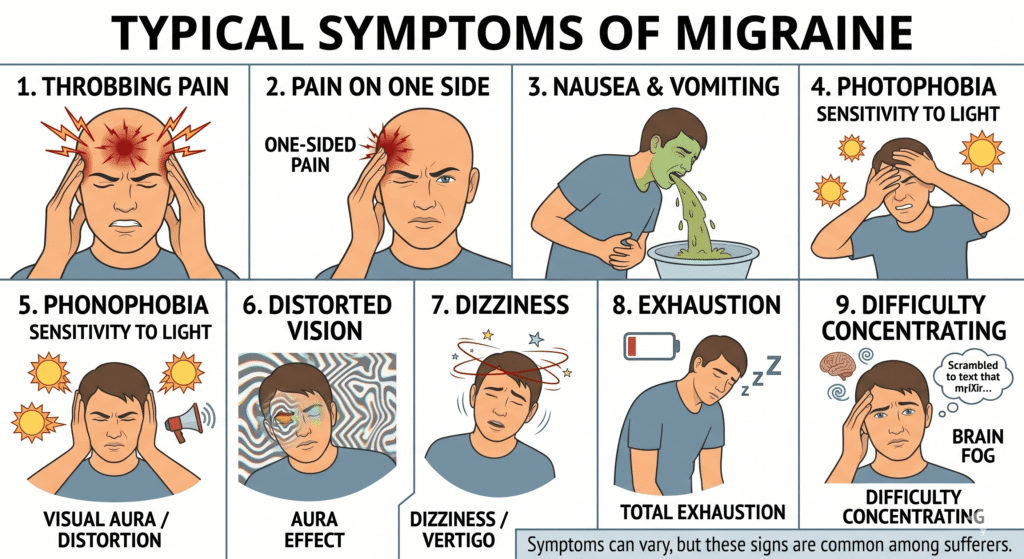
The symptoms of Migraine differ from one individual to another, yet the following signs can be considered typical:
- Throbbing pain in the head.
- Pain on one side of the head.
- Nausea and vomiting.
- Hypersensitivity to light.
- Hypersensitivity to sound.
- Distorted vision.
- Dizziness.
- Exhaustion.
- Difficulty concentrating.
A migraine could be preceded by what is called an aura. Some of the symptoms, in addition to the above may be:
- Flashing lights
- Zigzag lines.
- Blind spots that may go away.
- Tingling.
- Difficulty articulating the words.
Common Causes and Triggers of Migraine
Migraine triggers do not cause migraines directly in everyone, but they may increase the chance of an attack.
Common triggers include the following:
- Lack of sleep
- Stress
- Skipping meals
- Dehydration
- Strong smells
- Bright lights
- Hormonal changes
- Weather shifts
- Certain foods (aged cheese, processed food, excess caffeine in some people)
Keeping a diary can help identify personal triggers.
Common Causes of Everyday Headache
Unlike migraine, many regular headaches come from lifestyle factors such as:
- Long screen time
- Neck strain
- Poor sleep
- Dehydration
- Stress
- Hunger
- Eye refraction issues
- Noise exposure
These often improve after hydration, rest, stretching, or sleep.
Migraine Treatments
There are different migraine treatments depending on severity, frequency, and symptoms. Treatment plans often include both lifestyle changes and medical management.
1. Lifestyle Measures
- Regular sleep schedule
- Proper hydration
- Balanced meals
- Stress management
- Exercise routine
- Trigger avoidance
2. Acute Treatment
Doctors may recommend medicines to reduce pain during an attack.
3. Preventive Treatment
If migraines happen frequently, preventive medicines may help reduce the number of attacks.
4. Supportive Care
- Resting in a dark room
- Cold compress
- Quiet environment
The right treatment depends on age, symptoms, frequency, and medical history and is individualized depending on various patient factors.
When a Headache Could Be Something Serious?
Most headaches are not dangerous, but some symptoms need urgent medical attention.
Seek immediate medical care if headache comes with:
- Sudden severe pain (“worst headache of life”)
- Weakness in arm or leg
- Slurred speech
- Seizure
- Fever with stiff neck
- Confusion
- Fainting
- Head injury
- Vision loss
These signs should never be ignored.
How Common Is Migraine?
Migraine is one of the most common neurological disorders globally.
Studies often report:
- Around 1 in 7 people may experience migraine
- Women are affected more than men
- Many people remain undiagnosed
- It is a leading cause of missed workdays and reduced productivity
This shows why awareness matters.
How to Manage Headache and Migraine Better
Simple daily habits can make a big difference:
- Drink enough water
- Sleep 7–8 hours regularly
- Do not skip meals
- Limit excessive screen time, especially before bedtime
- Manage stress
- Exercise regularly
- Maintain posture
- Track symptoms in a diary
If headaches become frequent, stronger, or change in pattern, medical evaluation is important.
Final Thoughts
Knowing the difference between migraine and headache helps people take symptoms seriously and choose the right next steps. While a common headache may improve with rest or hydration, migraine often needs proper diagnosis and long-term management.
If you are experiencing repeated headaches, migraine symptoms, dizziness, or neurological concerns, consulting an experienced neurologist is a wise step.
Dr. Amit Arora, Consultant Neurologist with 15 years of experience, offers expert evaluation and management for migraine, headache disorders, epilepsy, stroke, and other neurological conditions in Dubai. Early guidance can help improve quality of life and daily comfort.